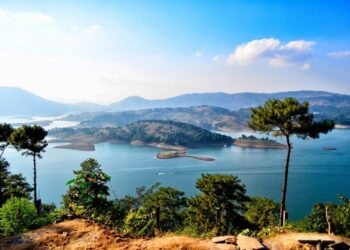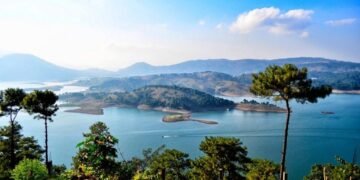











Forest and environment minister, James K Sangma today said that Meghalaya aspires to be a leader to create a green bloc coalition to find solutions to fast depleting natural assets.
Sangma who took part in a ‘Ministerial Session on Sub-national Leadership for Inclusive Green Growth’ part of the World Sustainable Development Summit (WSDS) in New Delhi today said that Meghalaya along with Arunachal Pradesh form the biggest carbon sinks crucial for India to honour the commitments made at the Paris Agreement. He also suggested the need for the North-Eastern region to be a unique green laboratory.
“The need of the hour is to have a concerted effort where all the states come together, put aside their differences and work collectively,” he said.
Pointing out that the implementation aspects of climate action, be it mitigation, adaptation and resilience, often falls on the state governments, ministers taking part in the summit mooted the idea of setting up a dedicated environmental council composed of representatives from the Centre and the states.
“On the lines of the GST Council, if we have the environment and forest ministers of all states along with the Union Minister of Environment in a council, I think that is where we can set targets and policies at the national level and implement at the state level,” said Aaditya Uddhav Thackeray, Minister of Environment, Government of Maharashtra.
Echoing Thackeray’s suggestion, Dr Palanivel Thiagarajan, Finance Minister, Tamil Nadu, said, “Lot of implementation needs happen at the local body, district and the state level. While policies are framed at the national level, bulk of the work is to be done at these levels.” Emphasising the crucial role of sub-national governance to tackle climate change as well as aid green growth,
At the session, the ministers highlighted the need for newer measures and yardsticks to assess and tackle climate change related impacts. Thackeray suggested putting out an annual environment report. “We can think of an ‘Ease of Living’ report that lists out environmental steps and targets, and what can be done in terms of climate action such as mitigation, adaptation and resilience,” he observed.
Noting that the diversity between states is vast and so are their needs and capacities, Dr Thiagarajan observed that for India to achieve the target of net-zero by 2070, “A state like Tamil Nadu has to get there no later than 2050 for it to be a realistic outcome for rest of India as we are far ahead in terms of the average per capita income and per capita consumption, education and growth.”