








Shillong, Dec 23: Kisan Diwas was observed in Meghalaya at the ICAR Research Complex for North Eastern Hill Region, Umiam, and ICAR-Krishi Vigyan Kendra (KVK), West Garo Hills.
Kisan Diwas commemorates the birth anniversary of the late Chaudhary Charan Singh, former Prime Minister of India and a stalwart advocate of farmers’ welfare.
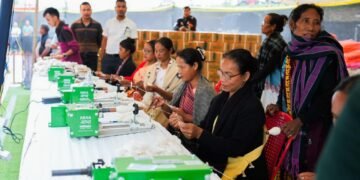
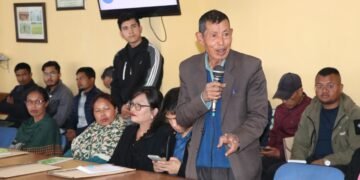
At Umiam, an awareness programme on the proposed MGNREGA replacement was held. The programme was attended by the Director of the Institute, scientists, technical officers, administrative staff, and around 300 farmers from Ri Bhoi districts of Meghalaya. The event was organised as part of a nationwide initiative conducted across 113 ICAR Institutes and 731 KrishiVigyanKendras (KVKs) to create awareness among farmers about the proposed rural employment reforms under the Viksit Bharat vision.
Scientists of ICAR NEH Region explained the salient features of the proposed bill and its relevance to the North Eastern Hill region, where agriculture forms the backbone of rural livelihoods. They stated that the bill aligns rural employment programmes with the national vision of Viksit Bharat 2047.
The programme concluded with an interactive session and distribution of informational materials, reaffirming ICAR’s commitment to farmer-centric development and sustainable rural prosperity across the country.
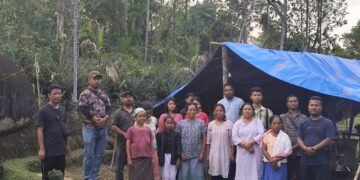
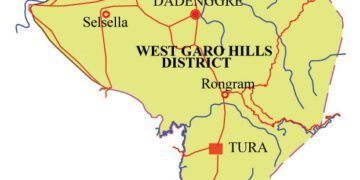
Along the same lines, 107 participants were present at the WGH programme. The event provided a platform for progressive farmers to share their innovative practices, success stories, and locally relevant solutions that have enhanced productivity and income in the region.
Subject matter specialists from KVK highlighted the importance of farmer-led innovations, climate-resilient agriculture, integrated farming systems, and the adoption of improved technologies. Farmers were encouraged to document and share their ideas so they could be refined and scaled up for wider benefit.
KVK experts explained the objectives of the program and emphasized community participation, convergence of government schemes, and the role of informed citizens in building self-reliant villages.Interactive sessions, demonstrations and open discussions helped clarify farmers’ queries regarding government support, improved crop practices, soil health and livelihood opportunities.