










By Dipak Kurmi
The volatile landscape of West Asia has once again reached a fever pitch, dragging the global community into a state of high alert as regional hostilities threaten to spill over into a totalized conflict. In a definitive suo motu statement delivered in the Rajya Sabha this Monday, External Affairs Minister S. Jaishankar articulated the Indian government’s official stance on the escalating crisis, emphasizing a doctrine rooted in restraint and the urgent de-escalation of kinetic operations. As the theater of war expands, New Delhi has found itself navigating a complex geopolitical labyrinth, balancing domestic political pressures against the cold realities of international realpolitik. While the opposition, led by the Congress party, has vocally criticized the Narendra Modi administration for its perceived silence regarding the assassination of Iran’s Supreme Leader, Ayatollah Ali Khamenei, the Ministry of External Affairs has opted for a more measured, pragmatic approach. By steering clear of explicit condemnations that could alienate key regional partners, Jaishankar has instead focused on a vision where peace is the ultimate objective, asserting that the creation of space for dialogue and diplomacy is no longer just a preference but an immediate humanitarian and economic necessity.
India’s deliberate refusal to pick a side is not a sign of indecision but rather a calculated reflection of the immense stakes it holds in the stability of the Gulf. The region serves as a vital artery for India’s national interests, encompassing energy security, the safety of critical maritime shipping lanes, and the welfare of a massive diaspora. With nearly 1 crore Indian citizens living and working across the Middle East, any prolonged instability directly threatens the livelihoods and physical safety of a population larger than many European nations. New Delhi’s unique diplomatic position allows it to maintain functional, and often warm, relations with the principal antagonists of this drama, including the United States, Israel, and Iran. Furthermore, India remains deeply connected to the Gulf monarchies, specifically Saudi Arabia and the UAE, who often find themselves caught in the crossfire of the broader Iran-Israel-US rivalry. In his address, Jaishankar underscored that the sovereignty and territorial integrity of all states in the region must be respected, a principle that serves as a subtle reminder that unilateral actions and proxy warfare undermine the very foundations of international law.
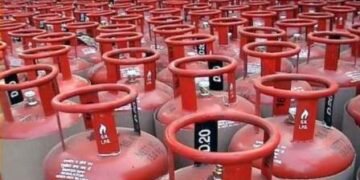
The economic dimension of this conflict is perhaps the most pressing concern for the domestic consumer in India. As a nation with an oil import dependency exceeding 88 percent, India is hyper-vulnerable to price shocks triggered by regional instability. The recent surge in oil prices has mirrored the volatility seen in 2022 following the Russian invasion of Ukraine, creating a significant inflationary burden on the Indian economy. This vulnerability is compounded by the strategic bottleneck of the Strait of Hormuz. Traditionally, around half of India’s crude oil and Liquefied Natural Gas (LNG) imports, along with over 80 percent of its Liquefied Petroleum Gas (LPG) imports, transit through this narrow waterway. The effective shutdown of the Strait has sent shockwaves through global energy markets and forced New Delhi to elevate energy security to an overriding priority. The disruption of these supply chains does not merely affect industrial output; it hits the kitchens and commutes of every Indian citizen, making the restoration of maritime order a non-negotiable objective for the Indian state.
Recent maritime incidents have brought the physical reality of the war closer to Indian shores than ever before. The sinking of the Iranian vessel IRIS Dena by US forces in the Indian Ocean Region last week marked a significant escalation that prompted the Indian Navy to launch immediate search-and-rescue operations. This incident effectively bloodied the waters in India’s immediate maritime neighborhood, highlighting the risk of the conflict drifting eastward. In a gesture of humanitarian and diplomatic outreach, Minister Jaishankar revealed that India has granted permission for three regional ships to dock at its ports, with the IRIS Lavan currently stationed in Kochi. This move serves as a testament to India’s commitment to maritime safety and its role as a first responder in the region, even as the western front of the conflict sees new heights of aggression. The recent drone attack on the island of Cyprus, purportedly executed by a Shahed drone launched by Hezbollah, further illustrates the reach of Iran’s proxies and the unpredictable nature of this multi-front war.
As the conflict shows no signs of abatement, India’s role as a potential mediator or a voice of reason becomes increasingly vital. The government remains in constant communication with its counterparts across the region to facilitate the safe return of its citizens should the situation deteriorate further. However, the broader goal remains the prevention of a full-scale regional conflagration that would dismantle decades of economic integration and security cooperation. By emphasizing a return to the negotiating table, India is positioning itself as a rational actor in an environment increasingly dominated by emotive and retaliatory violence. The path forward for New Delhi involves a rigorous opposition to any attempts to widen the conflict, combined with a persistent demand for the reinstatement of diplomatic channels. In a world where the lines between friend and foe are being redrawn in blood, India’s insistence on a balanced, peace-oriented approach may be the only safeguard against a global economic and humanitarian catastrophe.
(The writer can be reached at dipakkurmiglpltd@gmail.com)