












By Dipak Kurmi
The current geopolitical landscape has been scorched by three weeks of unrelenting escalation in the US-Israel-Iran conflict, a conflagration that began as a localized regional skirmish but has rapidly metastasized into a global economic crisis. There is no sign of a let-up in hostilities; instead, the theater of war has expanded, casting a long, dark shadow over international trade and energy security. India, despite its geographical distance from the epicenter of the kinetic warfare, finds itself in the crosshairs of this volatility due to its acute sensitivity to energy price shocks. As the war prolongs, the strategic fragility of a globalized economy becomes painfully apparent, particularly for a nation like India that relies heavily on the uninterrupted flow of fossil fuels through the Strait of Hormuz. This narrow waterway, a chokepoint of immense strategic importance, is currently the pulse of the global energy market, and any constriction there sends tremors through every sector of the Indian economy.
The impact of this disruption is nothing short of staggering, as oil markets have entered a state of frantic instability. Crude prices have already surged to a daunting $119 per barrel, a level that strains the fiscal capacity of even the most robust economies. Market analysts and energy experts warn of a grimmer reality on the horizon, predicting that prices could realistically touch $150 per barrel within a matter of weeks if a diplomatic resolution or a secure maritime corridor through Hormuz is not established. This price trajectory is not merely a number on a trading screen; it represents a fundamental threat to India’s macroeconomic stability. The Iran war has once again stripped away the veneer of global energy stability, exposing the profound vulnerability of nations that have yet to achieve energy independence and are thus beholden to the whims of distant conflicts.
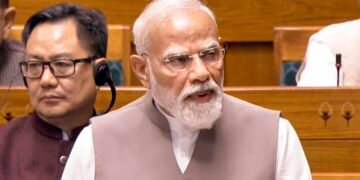
Recognizing the gravity of this existential threat, Prime Minister Narendra Modi recently convened a high-level emergency meeting to review the nation’s energy preparedness and strategic reserves. This move signals a profound sense of urgency and concern within the highest echelons of government, reflecting the understanding that energy security is now synonymous with national security. While retail petrol and diesel prices at the pump have been shielded from the full brunt of the surge so far, this artificial stability is precarious and unlikely to endure. Industrial diesel prices, which are more sensitive to market fluctuations, have already spiked by approximately 25 per cent. This hike is a harbinger of broader economic distress, as it inevitably translates into higher transportation and logistics costs, triggering a cascading effect of inflation across agriculture, manufacturing, and essential services.
Compounding this energy-led inflation is the alarming depreciation of the Indian rupee against the US dollar. The currency is under immense pressure as the cost of oil imports swells the trade deficit, leading many to believe that the rupee is on the verge of breaching the psychological and economic threshold of 100 against the dollar in the coming months. This currency devaluation creates a vicious cycle; as the rupee weakens, every barrel of oil becomes more expensive in domestic terms, further fueling inflation and draining foreign exchange reserves. It is no exaggeration to say that the dual blow of high oil prices and a failing currency represents one of the most significant challenges to India’s growth story in recent decades, necessitating a radical shift in how the nation perceives and manages its energy requirements.
Like every historical crisis, this conflict offers a set of harsh but necessary lessons for those willing to heed them. For far too long, India has navigated its developmental path while remaining tethered to imported oil, often ignoring the reality that such a dependency is a severe strategic weakness. For a nation that strives to be a dominant regional power and a global leader, being at the mercy of external energy shocks is an untenable position. The time to correct this structural vulnerability is not in some distant future, but right now. This is not a problem that can be solved with short-term fixes or “band-aid” solutions, such as scouting for temporary alternative suppliers or increasing domestic cesses to dampen demand. Such measures are merely palliative; they do not cure the underlying malady of energy insecurity that plagues the Indian state.
To truly alter the energy equation, India must commit to deep, structural investments in domestic exploration and high-tech refining facilities that can handle a diverse array of crude grades. However, even these are intermediary steps toward the ultimate goal of a diversified and self-reliant energy mix. The path forward demands an aggressive shift toward sustainable solutions, including advanced biofuels and large-scale renewable energy resources. By integrating green hydrogen, offshore wind, and next-generation solar technologies into the national grid, India can begin to decouple its economic growth from the volatility of Middle Eastern geopolitics. This transition is not an idealistic dream but a proven strategic necessity, as evidenced by other global powers that have successfully navigated similar transitions to bolster their sovereignty and industrial prowess.
International precedents provide a roadmap for this transformation. Germany, through its ambitious ‘Energiewende’ policy, demonstrated that a major industrial economy could rapidly scale renewable energy to reduce its carbon footprint and energy dependence. Similarly, Denmark’s wholesale switch to wind energy has turned it into a global hub for green technology, while China has strategically positioned itself to dominate the global supply chains for solar panels, wind turbines, and lithium-ion batteries. These nations recognized that energy security is a pillar of industrial strategy. For India, the electrification of transport, the massive expansion of public transit systems, and the rigorous promotion of energy efficiency across the industrial sector are essential components of a strategy to drastically reduce the volume of oil that must pass through the Strait of Hormuz.
Furthermore, macroeconomic resilience must be fortified alongside energy infrastructure. Strengthening the rupee through disciplined fiscal management and a concerted push to boost high-value exports will provide the necessary buffer to mitigate the impact of future external shocks. The current crisis serves as a stark reminder that a nation’s autonomy is only as strong as its weakest link, and for India, that link has long been its thirst for foreign oil. By prioritizing a long-term, multi-sectoral strategy that fuses energy policy with fiscal prudence and technological innovation, India can transform this moment of crisis into a turning point. The objective is clear: energy security must be elevated to a top-tier national priority to ensure that the country’s destiny is never again held hostage by conflicts beyond its borders.
(The writer can be reached at dipakkurmiglpltd@gmail.com)