












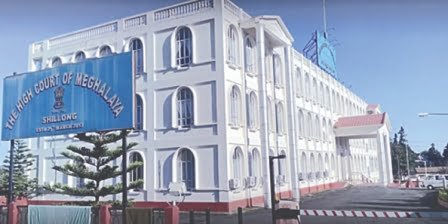
A public interest litigation (PIL) seeking to do away with the three district councils in Meghalaya was dismissed by the High Court of Meghalaya after the petitioner withdrew the case, which the court was disinclined to entertain.
This was informed by V G K Kynta, the senior lawyer who was representing the Khasi Hills Autonomous District Council (KHADC) in the case.
The PIL was filed by social activist Michael Syiem in 2015. His argument was that the continuing operation of the KHADC and its Jaintia and Garo counterparts – JHADC and GHADC – was unconstitutional.
The matter came up for hearing on February 19 before the Division Bench of the High Court.
After hearing both parties, the court was not inclined to accept the stand of the PIL petitioner.
“It is justified that such a PIL should be closed because if such a PIL is allowed, it would be disastrous for a fragile tribal society having their unique customs and practices and would render hundreds of employees jobless in these tough times,” Kynta told Highland Post.
He also said that the Panchayati Raj, brought in by 73rd amendment to the Constitution, is exempted from applying to tribals areas covered by the Sixth Schedule.
“Such a PIL, which academically perhaps may sound plausible, is, in the present context, practically out of place,” he averred.
It may be mentioned that Michael Syiem had filed the PIL way back in 2015 urging the High Court to declare illegal and unconstitutional, the continuance of the operation of the three Autonomous District Councils in the State.
He said the people were confused by the conflict of powers between the State government and the district councils.
Stating that the district councils were created under the Sixth Schedule during undivided Assam but they continue to exit though Meghalaya was carved out of Assam in 1972, Syiem had pointed out that the district councils were relevant only when we were under Assam.
He had also said that if district councils are still relevant, then their powers and functions should be clearly defined to avoid any clash between the State government and district councils.