







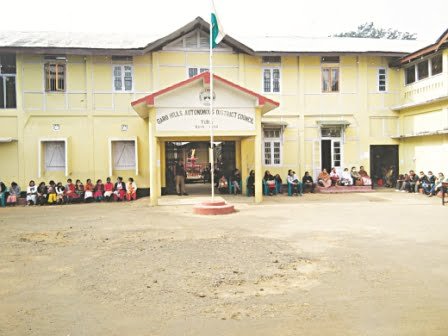
Shillong, Mar 3: The debate over whether non-tribals or non-Garos should be able to contest elections or vote in the Garo Hills Autonomous District Council (GHADC) is only intensifying, with views on both sides of the argument being aired in public.
Former MDC Sofiur Rahman and former MLA Esmatur Mominin have argued against keeping non-tribals out of the GHADC, with Rahman going as far as threatening to move court over the matter.
On the other side are certain (but not all) Garo politicians and pressure groups whose position is that the GHADC has been created to protect tribal rights and there is no justification for non-Garos or non-tribals to participate in the body.
In the latest salvo, Rongrong MDC Rinaldo Sangma disagreed with Rahman’s interpretation of the eligibility of membership to the GHADC, saying it is “fundamentally flawed and misunderstood”.
The GHADC was established under the Sixth Schedule of the Constitution to preserve and govern according to the customs, traditions and laws of the Garo people, Sangma said and the council’s legislative, judicial and executive competence extends exclusively to matters pertaining to the Garo tribe and not to non-tribals or other Scheduled Tribes residing in Garo Hills.
He stressed that the historical presence of non-tribal communities in Garo Hills does not confer upon them the constitutional right reserved exclusively for tribal governance under the Sixth Schedule. He added that the GHADC is not a general local body and urged Rahman and Mominin to retract their statements that the GHADC belongs to non-tribals also.
There were also statements to this effect made separately by the Constitutional Rights Forum (CRF), A·chik State Peoples’ Front (ASPF) and Garoland State Movement Committee (GSMC).
The CRF said that the GHADC has the authority to prescribe qualifications for its members, including the requirement of a Scheduled Tribe (ST) certificate for candidates. It rejected references to past instances of non-tribal participation, describing them as administrative oversights rather than legally binding norms.
The ASPF argued that any public challenge to GHADC electoral structure provisions risks creating confusion and weakening protections granted to tribal communities, while the GSMC said that eligibility norms in GHADC elections were part of the discussions that led two rebel groups (ANVC and ANVC-B) to join the mainstream and should be respected.