












Editor,
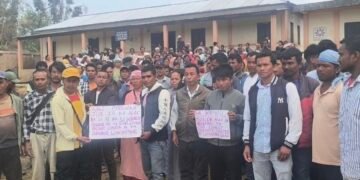
I wish to draw attention to the deeply concerning situation that unfolded in Laban, Shillong, Meghalaya, India on the 4th April 2026 during the recent Khasi Students’ Rally, which caused widespread disruption and unease among residents. The entire locality was effectively brought to a standstill. Shops remained closed, daily life was halted, and most disturbingly, even temples were seen covering their premises. Such scenes do not reflect a peaceful democratic expression but instead point unmistakably towards an atmosphere of fear, coercion, and silent compliance. It is particularly troubling that the police and district administration were well aware of these developments, yet there appeared to be no meaningful effort to instill confidence among citizens. No visible steps were taken to reassure shopkeepers, encourage normalcy, or ensure that people could go about their daily lives without fear. Instead, the prevailing perception is that, in the name of maintaining security, people were indirectly encouraged, if not compelled, to stay indoors.
This raises serious and unavoidable questions. Was this shutdown truly voluntary, or was it subtly enforced through pressure and anticipation of consequences? Reports, albeit informal, suggest that local authorities may have advised closures. If temples were asked to cover their premises as a precaution, it reflects either a credible threat or a complete failure of the administration to guarantee even basic security. In either case, such actions, taken in the name of protection, only served to deepen the fear psychosis rather than alleviate it.
While any organization has the democratic right to hold rallies and observe occasions such as Khasi Awakening Day, such exercises cannot come at the cost of paralysing an entire residential and commercial locality. Celebration, by its very nature, should be inclusive, not exclusionary, not intimidating, and certainly not enforced through an atmosphere of fear. It should rather be an invitation to all who resonate with the idea of Khasi and feel part of the society, if not racially, but at least culturally. I mean neither the government nor the civil society tries to advocate discipline of any order. There is also all faith forum with leaders of the church, temples and other hindu festival event managers in the state that does nothing other than lip service
What is even more concerning is the deeper administrative and structural contradiction. Areas like Laban have historically been part of the municipality and were administered as such since the 1800s under the broader ambit of the Shillong Administered Areas/Municipality during the colonial period. Yet, despite being urban, mixed, and long-settled localities with permanent non-tribal residents, they continue to function under frameworks, including the Sixth Schedule, that often create ambiguity in rights, protections, and administrative accountability. But no one will ever talk about this, and rather with this history of colonial settlement, the non-tribals are eyed with vengeance and jealousy. You will be governed, but you can’t vote in the District Council. There are no Municipal Elections as well.
Allowing such rallies in densely populated residential pockets without robust safeguards reflects a serious lack of foresight and responsibility. Reports of stone pelting and threats to residents, including women, are deeply alarming. In fact, it is clearly seen who is throwing the stones, but no one will be punished. In such circumstances, administrative inaction is not merely negligent, it borders on complicity. The district administration’s response appears immature, irresponsible, and insensitive to the democratic fabric of a cosmopolitan society like Shillong and Meghalaya at large. It creates the impression that governance is being shaped to accommodate selective narratives rather than uphold the rights and security of all citizens. The district administration could very well direct the rally to more open public areas, but it seems like the administration and the DC are more interested in creating a war-like situation and communalism. Now, in the event of such police failure, every person affected should file an FIR against the District Administration.
The larger issue here is not merely one isolated incident, but a disturbing pattern that risks normalising disruption, fear, and administrative passivity. When citizens begin to feel that normal life can be suspended at will, trust in institutions erodes rapidly. Are we moving towards a situation where fear dictates public life? If both societal pressures and administrative inaction contribute to such an environment, then the fundamental question arises: where do ordinary citizens look for protection and assurance?
It is imperative that the authorities reflect seriously on these developments. Confidence-building measures, administrative accountability, and a firm commitment to ensuring that democratic rights do not trample upon civic normalcy are not optional, they are essential. This has been an annual ritual of attacks on non-tribals and simple internet search could show the reptead activity. A small voice from all of you helps many innocent lives.
Johny Kumar
Via e-mail