











The Supreme Court ban on the mining and transport of coal seems to have had little to no effect on the movement of the mineral, albeit in a different state – coke.
Despite being an open secret, no action seems forthcoming and this has seen the state lose huge amounts of revenue even as mining continues for the more than 25 coke factories that dot West Khasi Hills’ Shallang.
Earlier, the government had ruled that most of the coke factories operating in West Khasi Hills were doing so without relevant permissions. The expected crackdown on these illegally set-up factories, however, failed to come.
Reports from Dainadubi in North Garo Hills, through which more than 30 coke laden trucks travel on a daily basis, points to a well-oiled machine that has continued to loot the state through underhand means.
It is undeniable that the coke factories are supplied with coal from within Meghalaya itself as there is no record of imports of coal into the state from elsewhere taking place.
A short calculation would indicate the amount of revenue loss being suffered, just from taxes that could have otherwise been realized from the sale of coal.
On an average, 1.5 tonnes of coal is required to produce about 1 tonne of coke. Thirty trucks per day moving through the Dainadubi checkpoint alone could yield somewhere in the range of Rs 20 lakh per day as taxes.
Given the state of finances in the state, this could have gone a long way to solve some of the financial problems of Meghalaya.
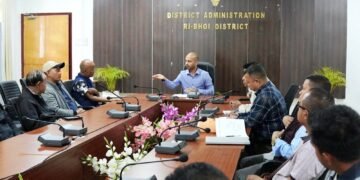
Highly-placed sources, on the condition of anonymity, said that they are aware of what is taking place but have no power in stopping the illegalities. The West Khasi Hills district administration has been loath to act on complaints that have surfaced, with only lip service paid to orders from the Industries Department or the Pollution Control Board.
“Everyone knows that the factories have been set up illegally and without the requisite permissions. It’s amazing that despite the overwhelming knowledge of the law, the powers that be have little care either for the revenue or the state of health of the people living close to Shallang, which is a residential area,” said a resident of Shallang not wishing to be named.