










Irked at not receiving an appointment to meet Chief Minister Conrad K Sangma, the Khasi Jaiñtia Deficit School Teachers Association (KJDSTA) and the Garo Hills Deficit School Teachers Association (GHDSTA) have served the government a deadline of 14 days to realize their demands, failing which they will launch ‘strong’ agitations.
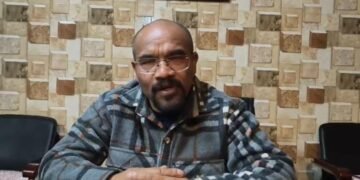
Addressing the media here today, Vice-President of the KJDSTA, Suzan Syiem, said that the government is yet to implement the recommendation of the Fifth Pay Commission with regards to deficit school teachers, namely pension and retirement benefits.
The government recently released arrears of 25 percent to the teachers, but Syiem pointed out that the government is behind even in paying arrears.
“As per a notification on June 21, 2018, the government committed to disburse the arrears of the revised pay in four installments of 25 percent every year with effect from 2018, but, to date, the first installment of 25 percent was released in December 2018, while the second installment was just released on February 19, 2021 and the teachers are awaiting the remaining 50 percent,” she said.
“Our silence does not show our weakness and we are just courteous because of the prevailing situation and as teachers we don’t want to hit the streets like NGOs do. We want to do it decently but we also have a stomach and family to run. We have been working hard during this pandemic and teaching the students in school as well as the online classes at home on the same topics with the same salary and with total disregard to our long pending demands,” the KJDSTA leader said, adding that teachers are being treated as second class citizens.
She further slammed the government for repeatedly claiming that education is one of its priorities.
“We have to remember teacher salaries are not from the state coffers because 90 percent of the expenses on education in the state comes from the Centre while the state government gives only 10 percent. Added to that, they are leveling cess on fuel and alcohol and claim that a huge sum of money is spent on education which is not true,” Syiem added.