








Shillong, Jan 30: Tura MDC Bernard N Marak has written to the Director General of Police urging the state’s top officer not to take the poster purporting to be from terror group ISIS lightly.
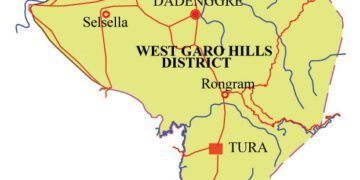
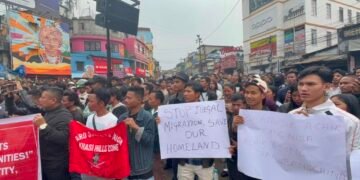
It was on Wednesday that a poster was spotted in Tura warning the Garo community to vacate parts of Garo Hills, mainly in the plain belt. It claimed to be from ISIS Khorasan, the so-called Islamic State’s Central and South Asian unit. While taking the threat seriously, police suspect that vested interests are behind the poster, aiming to create fear and escalate tensions.
The plains of Garo Hills have a large population of non-Garos, many of the Muslim community. There have been some fears that more such non-tribals will settle in Garo Hills due to instability in neighbouring Bangladesh and by those supposedly leaving Assam in the wake of pressure put on Muslims by that state. There have also been calls within Garo Hills for non-tribals to prove that they are not illegal immigrants.
Marak, a former militant in the ANVC-B, said that while the poster cannot be ruled out as fake, “the possibility of sympathisers and overground supporters of such terrorist groups being present cannot be ignored.”
He alleged that there have been instances of “several fanatics” in the plains who have claimed ownership of Garo Hills from the Garo community.
Marak also said that the settlers in the plains are asserting claims over Garo Hills “by relying on pattas issued under the Assam Schedule within Sixth Schedule areas. These pattas have been issued without constitutional sanction, legal notification or approval by the Governor.”
This “constitutional violation”, he added, has created the “misconception that lands under Non-Hill Mauzas (Mauza 5.6.7,8.9,10) are not tribal lands, despite the fact that only 4 Hill Mauzas and 4 Hill Mauzadars exist under GHADC. The functioning of Non-Hill Mauzas without Mauzadars or constitutional sanction is a serious anomaly.”
He also referenced the murder earlier this month of Garo activist Dilseng Sangma. Tensions were heightened after the incident, which took place after Sangma and the group he was part of were investigating illegal stone quarrying activities in the plains.