










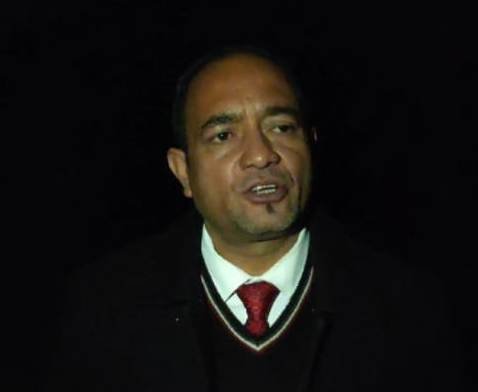
Shillong, Mar 1: North Shillong MLA Adelbert Nongrum on Saturday questioned the expert committee’s report on the state reservation policy.
According to Nongrum, the committee did not make its recommendation on the basis of merit, as was clearly required by the terms but it was instead based upon numbers.
“Surely the task of the expert committee was to review the merits of the state reservation policy and not to conduct a poll on who is in favour of retaining the 1972 Reservation Policy and who is in favour of change,” the opposition legislator said.
The reservation policy governs the quotas assigned to the Khasi-Jaintia, Garo, other groups and general category in government jobs and, by extension, education places. The committee’s report was released by the government last week and it had only suggested a few minor changes rather than the wholesale reform supported by some, such as Nongrum.
According to him, had the public known the number of submissions would be counted, it would be a referendum, but that was not mandated in the terms of reference.
The MLA pointed out that he found the report findings showing statistics that 84 percent of representations are in favour of no change to the policy, is highly questionable.
He said that he found that the expert committee had taken into consideration 547 representations received either by letter or by email, but only 105 people in total actually turned up at the public hearings conducted at Shillong, Tura, Williamnagar and Jowai.
“Which means that as many as 442 representations considered by the expert committee were not persons whose identity was established but rather were faceless submissions made only on paper or email,” Nongrum stated.
He stated that he has carefully gone through the submissions and found a total of 260 duplicate submissions, adding that 152 submissions being in email format having the same content ditto from start to end, and another 108 submissions in another email format also having same content ditto from start to end.
The North Shillong MLA also questioned the expert committee for recommending that “reservation should not solely be based on the population proportion of a tribe or caste.”
He pointed out that the January 12, 1972, the state reservation policy, has conveyed the decision of the government at that time to make reservation in favour of the Scheduled Tribes and Scheduled Castes, states “keeping in view, the inadequacy of representation of these communities in the services under the autonomous state of Meghalaya in terms of their population”.
He stated that it is thus clear to everyone who reads the opening paragraph of the 1972 resolution that the reservation so decided was based on population, and in the context of today’s enlightened understanding of affirmative action by the state that reservation benefits should reach the most socially backward and economically disadvantaged sections of society, the 1972 resolution is therefore totally outdated and needs to be revamped.
Nongrum questioned, if the expert committee is of the view in its recommendation number 1 that reservation should not solely be based on the population proportion of a tribe or caste, then why has it in recommendation number 13 of the report indicated that “the committee recommends retaining the 1972 reservation policy as it stands” and that “the committee also finds no compelling reason to modify the policy at this time”.
Meanwhile, Nongrum also said that as one individual who gave submissions to the expert committee, pointed out a flaw in the Report submitted by the panel.
According to him the report of the expert committee in one part shows that he suggested that there are no changes required in the present system and roster system should be implemented prospectively.