









By Dipak Kurmi
In the quiet corridors of power, events often unfold far from the public eye—until a sudden jolt exposes the deep fractures behind the façade. Such was the case with the unexpected resignation of Vice President Jagdeep Dhankhar on July 21, 2025. Just eleven days earlier, Dhankhar had jovially declared he would serve out his full term until August 2027, “subject to divine intervention.” When he abruptly stepped down from one of the highest constitutional offices in the country, the silence that followed was louder than any explanation. No farewell speech, no ceremonial send-off, not even a token expression of regret from the ruling establishment. In a political culture known for its relentless theatre, this exit was ominously subdued.
Behind this political mystery lies a story of fractured loyalties, bruised egos, procedural rigidity, and the unchecked centralisation of power in India’s parliamentary democracy. To understand the unceremonious departure of Mr Dhankhar—once a staunch defender of the BJP-RSS ideological agenda—we must go back not just to the events of mid-July, but to the deeper tensions simmering within the structures of power in New Delhi.
An Erupting Faultline
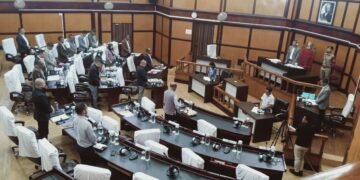
When Parliament reconvened on July 21, there was nothing ostensibly out of the ordinary. The government had held its customary pre-session meeting with Opposition floor leaders, assuring space for discussions on “all issues.” Yet, these are rituals that now serve more as diplomatic fig leaves than genuine efforts at bipartisan engagement. The Indian Parliament, particularly the Rajya Sabha, has increasingly become a site of deadlock, where even agreeing on what to debate has become a battleground.
The key point of contention has consistently been Rule 267 of the Rajya Sabha—an instrument allowing members to suspend scheduled business to debate matters of urgent public importance. Though Rule 267 is procedurally legitimate and has historical precedent, the ruling NDA coalition has, since 2016, treated it as a political affront akin to a no-confidence motion. Mr Dhankhar, as Chairman, steadfastly refused to admit any motion under Rule 267 throughout his tenure, echoing the government’s disdain for spontaneous and uncomfortable debates.
On July 21, this pattern played out again. A BJP MP moved a motion under Rule 167 to discuss the Pahalgam terror attack and Operation Sindoor. The Opposition, meanwhile, submitted multiple notices under Rule 267 to debate the same issue. Predictably, Dhankhar allowed the BJP’s motion as a “No-Day-Yet-Named Motion” and rejected the others. The House descended into chaos. No one from the ruling party offered guidance on how a Rule 267 motion might be considered valid, revealing a disturbing opacity in parliamentary procedures.
But then came a shock: Dhankhar summoned the Business Advisory Committee (BAC), ostensibly to discuss the legislative agenda. After the morning meeting ended without resolution, the BAC reconvened in the afternoon—this time, two key ministers, Kiren Rijiju and J P Nadda, were absent. Apparently offended by the absence of government representatives, Dhankhar adjourned the BAC. Later that evening, at precisely 9:25 p.m., he resigned, citing “medical advice.” The timing was calculated. The symbolism, deliberate.
Silence, Disrespect, and the Withering of Protocol
The speed with which the government moved on was telling. The very next day, the Deputy Chairman informed the Rajya Sabha of the “occurrence of vacancy.” There was no appeal to Dhankhar to reconsider, no resolution of appreciation, no acknowledgment of his constitutional role. The BJP’s cold silence marked a brutal snub. For a man who had carried the ideological baggage of the ruling establishment on his shoulders, the quiet farewell bordered on betrayal.
Dhankhar had been more than just a ceremonial Vice President. He had actively participated in shaping and defending the BJP-RSS’s ideological thrust in Parliament and public discourse. He had championed One Nation, One Election (ONOE), backed the removal of “secular” and “socialist” from the Constitution’s Preamble, and questioned the judiciary’s foundational doctrine of Basic Structure established in Kesavananda Bharati. He had also criticised Article 142 and attacked the primacy of the judiciary in judicial appointments. His call to “authenticate” data used in parliamentary speeches ran counter to Article 105, which protects MPs’ speech. Yet, he was seen as a loyal foot soldier. So why was this once-valuable political warrior discarded without so much as a thank you?
A Crisis Triggered by Judges?
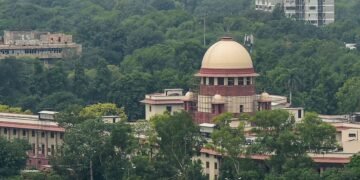
Much of the speculation centres around two motions submitted on July 21—one in the Rajya Sabha to impeach Justice Yashwant Varma and another in the Lok Sabha against Justice Shekhar Yadav. The first was an Opposition-backed initiative signed by 63 MPs. Though Dhankhar had held back a similar motion against Justice Yadav for over seven months, the new motion forced his hand. Cornered, he admitted both. It is widely believed that this move infuriated top BJP leaders who felt Dhankhar had undermined their strategy of using the Lok Sabha to target “inconvenient” judges without opening the door for Opposition retaliation. But these were merely the final straws. The real break was longer in the making.
Disillusionment, Ego, and Political Isolation
According to insiders, Dhankhar had begun to feel increasingly sidelined in the functioning of the Parliament. Despite his constitutional position ranking above the Prime Minister in protocol, he was denied a meeting with U.S. Vice President J.D. Vance during his India visit in April—an omission that deeply embarrassed him. Furthermore, he resented the growing dominance of Lok Sabha Speaker Om Birla in setting legislative tone, often at the cost of Rajya Sabha’s autonomy.
What truly marked him out, however, was his growing proximity to Opposition leaders. Whether out of grievance or ambition, Dhankhar held private meetings with members of the Congress and AAP, reportedly to voice his frustration at being treated as a rubber stamp. Ministers like Kiren Rijiju and J P Nadda allegedly warned him not to disrupt BJP’s plans on the judicial motions. His defiance—public and political—was seen as insubordination.
The BJP, ever wary of dissidence, decided he had to go. In what appeared to be a coordinated response, MPs were summoned to Defence Minister Rajnath Singh’s office to sign a blank paper—rumoured to be a prelude to a no-confidence motion. Dhankhar’s resignation that evening turned a silent coup into a public spectacle.
The Perils of Outsider Appointments
Dhankhar’s political journey itself is instructive. He began with Devi Lal and moved through the Janata Dal, Samajwadi Janata Party, Congress, and finally BJP. His gubernatorial stint in West Bengal—marked by daily clashes with the Trinamool Congress—catapulted him into BJP’s good graces. Yet his party-hopping past, and his sharp legal mind, perhaps made him too independent for comfort.
Now, party insiders say, the BJP is unlikely to trust anyone outside its core ideological ranks for key constitutional roles. There is talk of a former Supreme Court Chief Justice with ties to a southern ally being considered for the Vice Presidency—a move that would signal BJP’s return to the safety of ideological loyalists.
Paradise Lost: The Other Quiet Crisis
As power politics plays out in Delhi, another story of neglect and decay unfolds in the Himalayan hill town of Landour. For over 200 years, Landour, perched above Mussoorie, was a pristine cantonment regulated by the Indian Army. It remained untouched by the chaos of urban tourism. But since the dissolution of the Cantonment Board three years ago, the area has succumbed to unregulated commercialization. Permissions for four new hotels and restaurants have turned its quiet pine forests into traffic-choked carnival grounds. Once enforced with military precision, zoning rules now appear pliable to the whims of builders and bureaucrats.
The Unravelling Elsewhere: Bihar and Gujarat
Meanwhile, political tremors continue across India. In Bihar, political strategist Prashant Kishor is emerging as an unpredictable force. While claiming to be the kingmaker, his abrasive style—calling senior intellectuals “tum log”—has alienated some, even as his anti-corruption pitch eats into the NDA’s upper-caste vote base.
In Gujarat, the Aam Aadmi Party’s surprise victory in Visavadar signals trouble for both the BJP and Congress. Congress’s persistent problem—its MLAs defecting to the BJP—has made voters wary. AAP’s Gopal Italia, perceived as incorruptible and anti-establishment, capitalised on this distrust.
A House Divided
Jagdeep Dhankhar’s sudden resignation reveals more than just a rupture between a man and his party—it exposes the brittle nature of institutional independence in today’s India. It highlights how procedural manipulation, unchecked executive dominance, and ideological rigidity have hollowed out the spirit of democratic functioning. The spectacle of his fall, the silence that followed, and the speed with which the government moved on all point to a chilling conclusion: that in today’s political climate, loyalty must be absolute, dissent is betrayal, and even the second-highest constitutional office offers no sanctuary from political retribution.
Life, as Dhankhar might have now realised, is not just a mystery. In Delhi, it’s often a trap.
(The writer can be reached at dipakkurmiglpltd@gmail.com)