


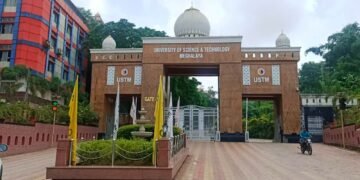







The trend for state governments to partner with private entities in the provision of healthcare services has hit bumps in the road around the country, which seems to cast doubt on Meghalaya’s plan for a public-private partnership (PPP) in the running of Tura Medical College and Hospital.
An exhaustive report in the Times of India last week showed that many states, following a central government initiative, have handed over government hospitals to private entities. However, the poor and marginalised have suffered under this arrangement, with many of these formerly government-run hospitals now charging more than what many people can afford for their treatment.
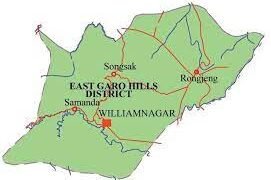
In Meghalaya there has been a furore in Garo Hills with the opposition Trinamool Congress (TMC) and several civil society groups coming out against the PPP model for the upcoming Tura Medical College and Hospital.
The college and teaching hospital is scheduled to begin operations next year. The state government has been at pains to reassure the public that Meghalaya will have a fixed quota of students for whom fees will be set with the approval of the government; that the cost of treatment at the hospital will be according to prescribed government rates; and that the physical assets will remain the property of the state government. The state’s argument is that, unlike in Shillong, where there are sufficient numbers of medical professionals to engage as teachers for the under construction Shillong Medical College, Tura lacks enough trained professionals and that is one reason for the need for a private partner.
Other states have also had student quotas and approved rates of treatment as well as reserving a percentage of beds for free or low-cost treatment. However, the TOI report, published on July 8, cited numerous examples around the country where these protections have seemingly failed to achieve their desired objectives.
Examples included a hospital in Raichur, Karnataka, where a hospital handed over to a private healthcare group at the start of the century was taken back under the management of the Karnataka government in 2012 after it was found that only a small proportion of beds were allotted to poor patients and that only 40 percent of the beds were functional at all.
The report also said that many once free services in government hospitals, such as outpatient consultation and diagnostics ended when the PPP model was introduced. The states argued that government-backed health insurances, either central or state, would cover the cost of the patients but the Centre’s Ayushman Bharat insurance programme only covers in-patient care, for a ceiling of Rs 5 lakh and only for certain procedures.
According to official data, private healthcare is 6 times more expensive than in government hospitals and India’s medical care inflation rate is the highest in Asia at between 12 and 14 percent. This is why such PPP models, the newspaper warns, are more akin to PPT – ‘People Pay Twice’, meaning once in the form of the taxes that go into building the medical infrastructure and twice in the high medical bills.
Then comes the matter of the medical colleges. While the PPP model might result in more MBBS seats, these will likely be unaffordable for many aspirants.
Citing the example of Uttar Pradesh, TOI said that the annual fees in government medical colleges are Rs 40,000. In private colleges the average is a whopping Rs 12 lakh.
Meghalaya has no government medical college of its own and the public were looking eagerly to those institutions being set up in Shillong and Tura to change this. However, the PPP model with regards to the Tura facility is worrying many.
Although the Meghalaya government maintains that it will keep a check on the fees, other states’ experiences have not been so positive. In West Bengal the fees at a PPP medical college for the state quota seats was Rs 26.5 lakh compared to Rs 40,000 in government-run medical colleges. In Gujarat, fees at a privately-run college for government quota seats is Rs 10 lakh per annum, while government colleges are charging just over a tenth of that for the entire course.
And the private players are making money hand over fist in many cases. In Bengal’s Howrah, a private group running a PPP college is earning Rs 26 crore in tuition fees but is paying the state only Rs 9 crore for use of government hospital beds. In Gujarat, the state spent Rs 290 crore on building medical colleges, which were then handed to private companies for a token Rs 1 for a 33-year period.
It is still early to judge whether the PPP model works or not but there are already important lessons for the states to learn. Whether Meghalaya learns these before it opens its first PPP medical college and hospital remains to be seen.