











Following widespread public complaints regarding JJM pipes without water supply, VPP legislator from North Shillong, Adelbert Nongrum today raised the matter in Assembly through a short duration discussion.
Questioning the tall claims of the MDA government on the implementation of the Central government’s flagship scheme, Nongrum said that the reality on the ground proved otherwise.
According to him, JJM dashboard mentioned that 74.60 per cent of households in the State have been provided with tap water supply, and out of the total number of 6,51,412 households to be covered, 4,85,927 have received functional household tap connection (FHTC).
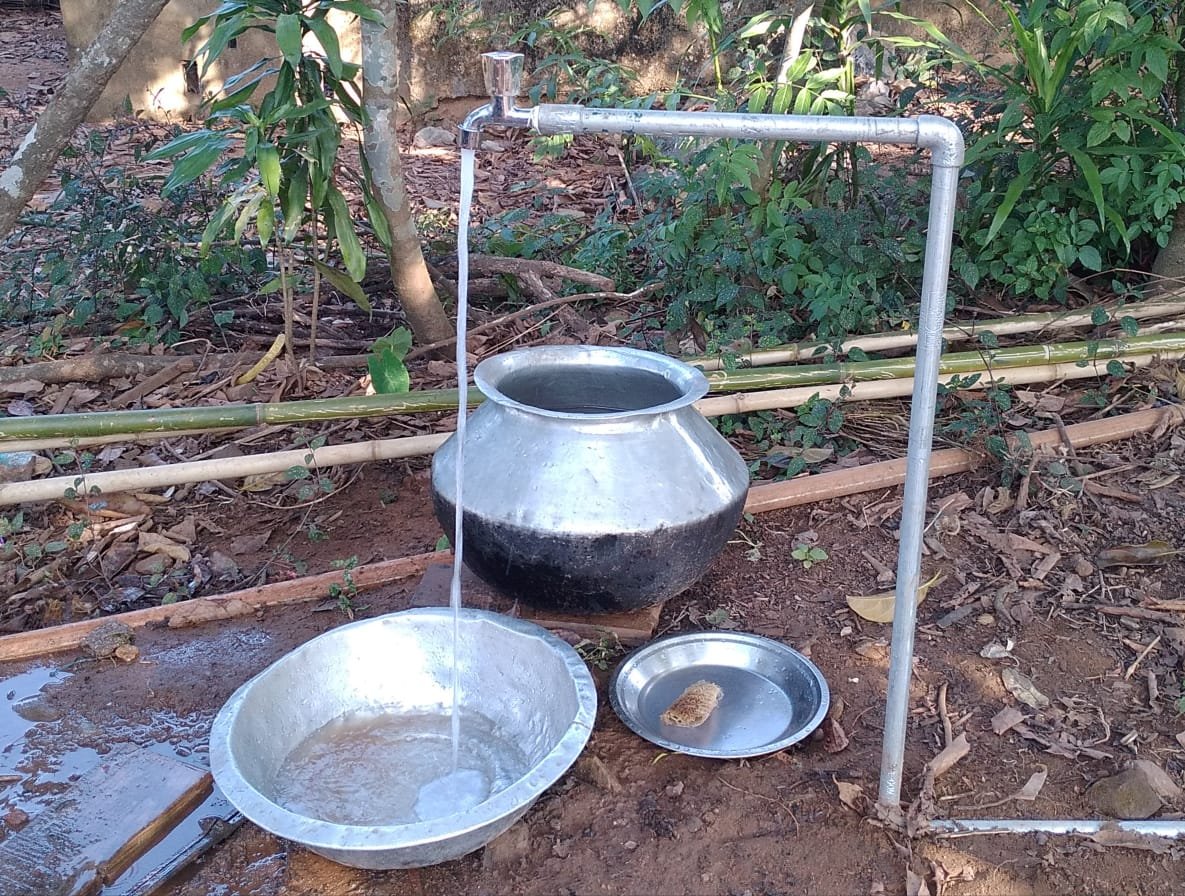
“Whether the government accepts it or not, this is the ground reality – either GI pipes are still being laid but have not reached households, or pipe connection has reached the edge of the residential compound but has not reached the household, or pipe connection is in reach of households but there is no tap. In almost all households there is no water supply yet,” Nongrum said.
He also said that the JJM dashboard showed that Thynroit village in East Khasi Hills having 1058 households had achieved 80.43 per cent tap connections or 851 households with tap connections.
“So I made a trip to Thynroit village and saw along the roads, a neat row of half inch GI pipes having been newly laid. I stopped to ask at the house of a traditional healer I am familiar with and was told that the GI pipe has reached their compound but there is no water supply yet. I asked them where they received their regular water supply and I was told that they have to buy at a price of Rs 300 for a Jeep tanker. Quite disturbed with the ground reality that I encountered, I went back to the JJM dashboard and re-checked the figures only to find that the page for Thynroit village on the JJM dashboard indicates ‘households with tap connections and not ‘households with water supply’,” Nongrum said.
The VPP MLA also said that the dashboard for Mawpat showed that 1024 households have tap water connections but there was no data for ‘households with water supply’. He also said that many pick-up jeeps with 1200 litre capacity water tanks are doing brisk business of supplying drinking water every day in the entire village.
“There is no harm for the government to admit in this House that there are indeed reporting errors in implementation of JJM in the State,” Nongrum said.
He also said that the reporting system of the scheme is more about documentation work rather than accurate monitoring of the physical progress of the work “which of course leaves plenty of room for financial irregularities to crop up”.
“Is full amount of payment being released to contractors when it is clear both in the ground reality and from data on the JJM dashboard that work has not been completed for FHTC? Will there still be enough funds under JJM after March-end 2024 to pay contractors who are not able to complete the allotted works yet?” he asked.
“As responsible leaders, it is better to come clean,” Nongrum said, adding that the government should utilise the Central government funds under JJM to ensure that every household actually gets functional tap water supply as promised.
In his reply, PHE Minister Marcuise N. Marak said the implementation of the JJM in Meghalaya has indeed been impressive, with a significant increase in functional household tap connections from 4550 (0.7 per cent) to 4,85,927 (74.60 per cent) rural households.
Further, Marak said that due to the substantial volume of data to be processed and uploaded and the complexities encountered in the field, there may be a small margin of error, perhaps around 1 per cent or less.