













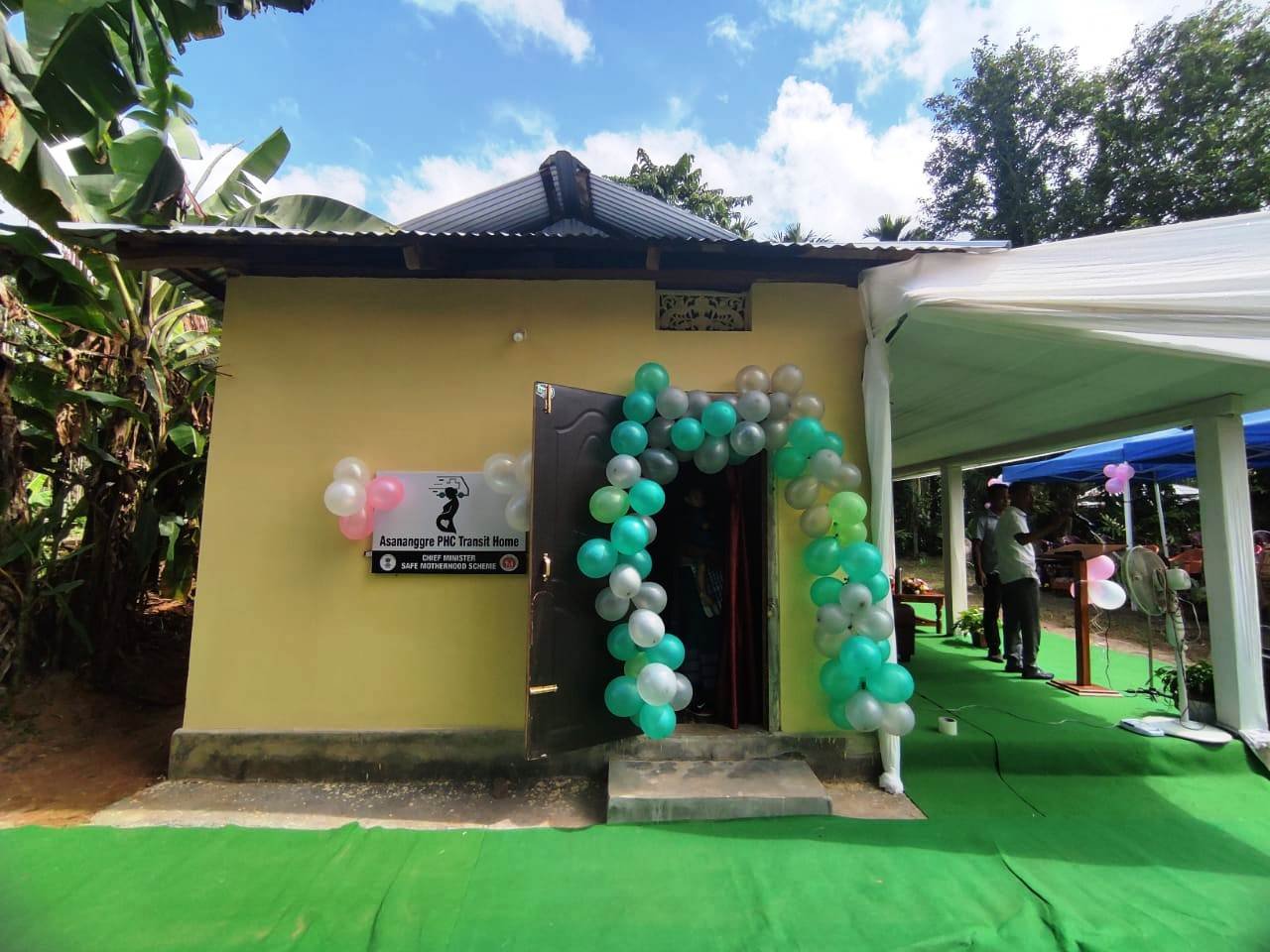
Transit homes under the Chief Minister Safe Motherhood Schemes (CM-SMS) have proven to be a boon for high-risk pregnant women from inaccessible villages.
Twenty-one years old Tira T Sangma, a high-risk mother from Imbegre, a remote village under the West Garo Hills, is due to deliver her third child at Asanang Primary Health Centre. This will be her first institutional birth; the other two children were born at home with the help of a traditional birth attendant and her mother. Tira was found to be anaemic when she attended a Village Health Nutrition Day (VHND) organised by the Auxiliary Nurse Midwife (ANM) and was advised against homebirth. Therefore, 10 days prior to her due date, along with her husband, she shifted to Asanang transit home run by the Mahila Asanang Self-Help Group that was officially launched by Chief Minister Conrad K Sangma.
The CM-SMS scheme, an initiative of the state government that aims to reduce maternal and infant mortality, consists of four main components – setting up transit homes for pregnant women; mobility support for ANMs to ensure that awareness is generated on preventive care for mothers and child in villages; dedicated vehicles to support transportation of pregnant women for maternity care; and compensation for time spent by attendants or traditional birth attendants to encourage family members to accompany the mother and stay with them.
Transit homes are accommodations located near Primary (PHCs) and Community Health Centres (CHCs) where high-risk pregnant women can stay to facilitate timely access to essential childbirth care and postpartum care. These homes provide them access to regular medical checkups, medicines, supplements and nutritional food. In these homes, mothers learn about breastfeeding, the importance of immunisation and other safe motherhood practices.
The scheme was launched early this year and till date, 129 transit homes have been established across Meghalaya, benefitting around 600 high-risk mothers. PHCs/CHCs with existing provision have set up these transit homes within their premises whereas those without any suitable facilities have sought the help of self-help groups and local entrepreneurs to identify and provide them with these transit homes.
One of the many reasons that mothers opt for homebirth rather than institutional birth is the fear of leaving their young children on their own at home for many days. This scheme ensures that mothers do not have to leave their kids on their own in the absence of any guardian or caretaker. Transit homes have adequate space for their children and attendants as well.
Tira was initially reluctant to opt for institutional birth but, after hearing about the risks associated with her pregnancy and with the persuasion of her husband, she decided to do so. She has been at the transit home for five days and is due to give birth in another five. For the first time she feels completely secure about her delivery, in the knowledge that she is in safe hands.