









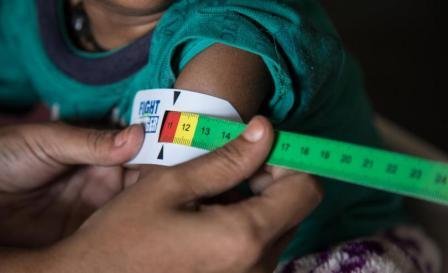
Meghalaya has recorded the highest level of stunting among children in India who are under five years of age.
This was revealed in the national report of the fifth round of National Family Health Survey (NFHS-5) which was released by Union Minister for Health and Family Welfare, Dr. Mansukh Mandaviya on May 5.
As per the report, the variation in stunting was highest in Meghalaya at 47 per cent and lowest in Puducherry at 20 per cent.
A notable decrease in stunting was observed in Haryana, Uttarakhand, Rajasthan, Uttar Pradesh and Sikkim (7 percentage points each), Jharkhand, Madhya Pradesh and Manipur (6 percentage points each), and Chandigarh and Bihar (5 percentage points each).
The report also stated that India has made significant progress in population control measures in recent times. The Total Fertility Rates (TFR), an average number of children per women, has further declined from 2.2 to 2.0 at the national level between NFHS-4 and 5.
However, there are only five states in India, which are above replacement level of fertility of 2.1. They are Bihar (2.98), Meghalaya (2.91), Uttar Pradesh (2.35), Jharkhand (2.26) Manipur (2.17).
Institutional births increased by a maximum of 27 percentage points in Arunachal Pradesh, followed by over 10 percentage points in Meghalaya, Assam, Bihar, Chhattisgarh, Nagaland, Manipur, Uttar Pradesh, and West Bengal.
NFHS-5 shows an overall improvement in SDG indicators in all states and union territories. The extent to which married women usually participate in three household decisions (about healthcare for herself; making major household purchases; visit to her family or relatives) indicates that their participation in decision making is high, ranging from 80 per cent in Ladakh to 99 per cent in Nagaland and Mizoram.
Rural (77 per cent) and urban (81 per cent) difference is found to be marginal. The prevalence of women having a bank or savings account that they use has increased from 53 to 79 percent in the last 4 years.
Between NFHS-4 and NFHS-5, the use of clean cooking fuel (44 per cent to 59 per cent) and improved sanitation facilities (49 per cent to 70 per cent), including a hand-washing facility with soap and water (60 per cent to 78 per cent) has improved considerably. There has been a substantial increase in the proportion of households using improved sanitation facilities, which could be attributed to the Swaach Bharat Mission programme.
The report comprises of detailed information on key domains of population, health and family welfare and associated domains like characteristics of the population; fertility; family planning; infant and child mortality; maternal and child health; nutrition and anaemia; morbidity and healthcare; women’s empowerment etc.
The main objective of successive rounds of the NFHS has been to provide reliable and comparable data relating to health and family welfare and other emerging areas in India. The NFHS-5 survey work has been conducted in around 6.37 lakh sample households from 707 districts (as on March, 2017) of the country from 28 states and eight union territories, covering 7,24,115 women and 1,01,839 men to provide dis-aggregated estimates up to district level.
The report also provides data by socio-economic and other background characteristics; useful for policy formulation and effective programme implementation.
The scope of NFHS-5 is expanded in respect of earlier round of the survey (NFHS-4) by adding new dimensions such as death registration, pre-school education, expanded domains of child immunisation, components of micro-nutrients to children, menstrual hygiene, frequency of alcohol and tobacco use, additional components of non-communicable diseases (NCDs), expanded age range for measuring hypertension and diabetes among all aged 15 years and above, which will give requisite inputs for monitoring and strengthening existing programmes and evolving new strategies for policy intervention.
Thus, NFHS-5 provides information on important indicators which are helpful in tracking the progress of Sustainable Development Goals (SDGs) in the country. NFHS-4 (2015-16) estimates were used as baseline values for a large number of SDG indicators and NFHS-5 will provide data for around 34 SDG indicators at various levels.
NFHS-6, which is scheduled to be conducted during 2023-24, proposes to cover various new domain areas, which include Covid-19 hospitalisation and distress financing, Covid-19 vaccinations, Direct Benefit Transfers (DBT) under various welfare schemes initiated by the Central government, migration, utilisation of health services – health and wellness centre, health insurance/ health financing, digital literacy, counselling on family planning after abortion and incentives under new methods of family planning, quality of family planning programme, menstrual hygiene, marital choice, visit by community health workers for health awareness and needs, supplementary nutrition from the Anganwadi/ICDS center while breastfeeding, blood transfusion (month and year), financial inclusion among women, knowledge of anaemia, Hepatitis B & C, Syphilis etc.
Unlike in previous rounds, NFHS-6 will adopt Urban Frame Survey (UFS, 2012-17) of NSO, Ministry of Statistics and Programme Implementation as a sampling frame for urban area. This strategy will minimise the non-sampling errors to large extent as the boundary identification problems using 2011 census frame will be resolved. While for rural areas, updated list of villages from NSO will be used as a frame, which would be matched with the principal component analysis from the Census to get auxiliary information.