









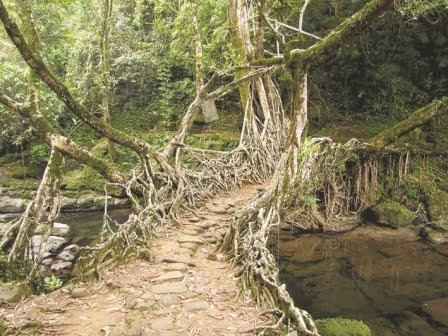
Chief Minister Conrad Sangma said that if the living root bridges of Meghalaya receive the UNESCO World Heritage Site tag, it would be more about the larger message to the world that the living root bridge is an ecosystem in itself.
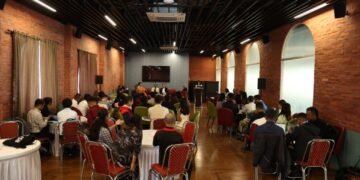
He was speaking at the National Convention on Community and Science based Conservation Research and Development of Jingkieng Jri held at the State Convention Center here today.
“Meghalaya’s Jingkieng Jri (Living Root Bridge) are trailblazers that not only highlight the symbiotic relationship between nature and human culture to a global audience, but more so, it focuses on the need to adopt a balanced approach between economy and ecology, something which the State government has been working tirelessly in the past few years,” Sangma said.
He also highlighted the concept of ‘Just Transition’ where he laid emphasis on ensuring a transitional process that is just for all, so that environment conservation is brought about while ensuring livelihoods for the primary force.
“As a State government, we have been extensively working towards Natural Resource Management where we are focusing on creation of livelihood out of the natural resources that we possess, so we use them in a sustained manner and yet create a parallel economy with more inclusive forms of livelihood, while keeping the ecology at the forefront,” Sangma added.
It may be noted that many such living root bridges in the forests are conserved by the communities of Meghalaya in the customary practice of preserving the sacred groves known as ‘Law Kyntang’. These forests also possess a huge resource of medicinal plants and herbs.
Speaking at the event, Prof. K Vijay Raghavan, the Principal Scientific Advisor to Government of India said that the living root bridges of Meghalaya which highlights the socio-cultural, social and botanical links among people and nature is well deserving of the tag of UNESCO World Heritage Site due to the rich micro as well as the macro world associated with them which will also initiate the need for their preservation and conservation.
In his opening remarks, Sampath Kumar, Principal Secretary to the Government of Meghalaya and CEO, Meghalaya Basin Development Agency, said that while the traditional knowledge of living root bridges is ancient, research on their ecosystem has become altogether more important to improve their conservation.
The community representatives of the Jingkieng Jri cooperatives present at the National conclave highlighted interesting activities being undertaken by them, which involved not only keeping alive the age old craft of building the living root bridges and preserving them but also their involvement in a wide array of activities. The event also witnessed performances from the community members of the Jingkieng Jri Cooperative societies.
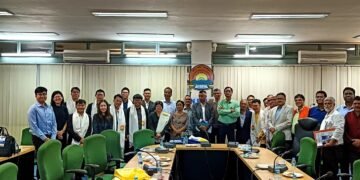
The conclave saw the presence of scientists from all over the country representing Geological Survey of India (GSI), Botanical Survey of India (BSI), Zoological Survey of India (ZSI), Indian Institute of Science (IIS), Forest Research Institute, and Center for Environmental Planning and Technology University. Presentations on the observations made from various site visits were shared by many scientists.