










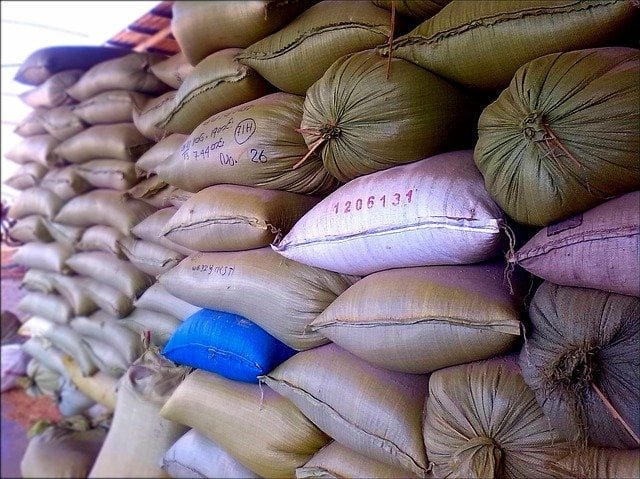
Around 21.46 lakh persons in Meghalaya who are covered under the Pradhan Mantri Garib Kalyan Anna Yojana (PMGKAY), a central scheme which provides free rice to people Below Poverty Line (BPL) will continue to get free rice till March 2022.
The beneficiaries include 2.91 lakh persons from 7000 families in the State covered under the Antodaya Anna Yojana (AAY) category and 18.54 lakh persons covered under the Priority Households category.
Under the PMGKAY, additional foodgrains at 5 kg per person per month are provided free of cost to all the beneficiaries covered under National Food Security Act (NFSA).
The total allocation of rice for Meghalaya under PMGKAY (Phase –I to Phase-V) is 203824.12 metric tons. The total distribution of rice under the scheme is 1,53,429 metric tons.
The first phase of PMGKAY was from April-June 2020. The second phase of the scheme was from July-November 2020. The third phase of the scheme was from May-June 2021.
The fourth phase of the scheme was from July-November 2021 and the fifth phase is from December 2021 to March 2022.
On November 24, the Union cabinet decided to extend the fifth phase of PMGKAY for another four months from December 2021 to March 2022.
The expenditure incurred by the Food Corporation of India (FCI) under PMGKAY for supply of food grains to Meghalaya in 2020-2021 was Rs 346.46 crore. For financial year 2021-22 (as on December 6), the expenditure incurred by FCI on account of supply of food grains to the State is Rs 317.51 crore. The total amount comes to Rs 663.97 crore.
It may be recalled that in the wake of economic disruptions caused by the unprecedented outbreak of Covid-19 in the country last year, the Central government in March 2020 had announced the distribution of additional free-of-cost foodgrains (rice/wheat) to about 80 crore National Food Security Act (NFSA) beneficiaries at the scale of 5 kg per person per month under the PMGKAY, over and above the regular monthly NFSA foodgrains i.e., regular entitlements of their ration cards, so that the poor, needy and the vulnerable households do not suffer on account of non-availability of adequate food grains during the times of economic crisis.