

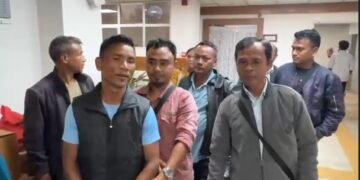



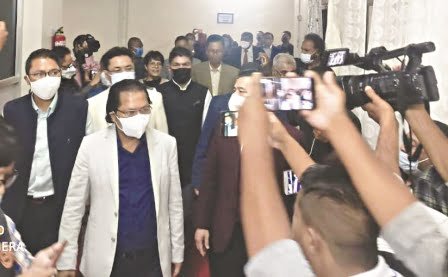
The opposition Congress party today staged a walkout after Speaker, Metbah Lyngdoh, declined to allow discussion in the Assembly over the demand for the suspension of police officers involved in the killing of former HNLC militant Cherishterfield Thangkhiew.
Lyngdoh had said that he had allowed for limited discussion on the topic during Question Hour but that, under Rule 59, it could not be proper to permit wider consideration of the matter.
The government had written a letter to Lyngdoh, which he accepted, which referred to Rule 59 of the procedures and conduct of business in the Assembly. Under this, “no motion which seeks to raise discussion on a matter pending before any statutory tribunal or statutory authority performing any judicial or quasi-judicial functions or any commission or court of enquiry appointed to enquire into or investigate any matter shall ordinarily be permitted to be moved.” However, the Speaker is allowed to allow such matters to be raised, based on his discretion, if such a discussion will not prejudice the inquiry.
It was the government’s assertion that as a judicial inquiry has been constituted to look into the circumstances that led to Thangkhiew’s death, it would not be proper to go into the suspension of police officers involved in the case.
However, leader of the opposition, Dr Mukul Sangma, said that the demand for suspending the police officers concerned could not be used to quash discussion in the house. Mawsynram MLA and Congress legislator Himalaya Shangpliang said that the opposition would confine themselves on the subject of Thangkhiew’s death to matters that would not be sub judice.
“The intent of the government is very clear to us,” Dr Sangma said before the walkout. “We will not in futility engage in discussion and debate. We walk out to demonstrate our disapproval and our complete lack of confidence in the intent of the government,” which, he said, was to prevent any possibility of discussion on the subject.
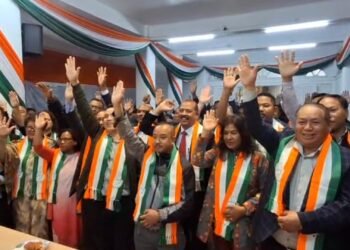
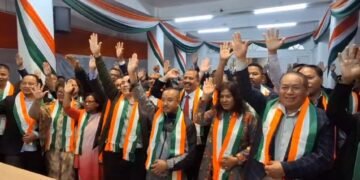
After the Congress legislators had walked out of the house, they started shouting slogans against Chief Minister Conrad Sangma, Home Minister Lahkmen Rymbui and the government.
Speaking to the media, the CM said that the opposition has the right to raise their objections in a democratic way to indicate their dissatisfaction over a particular decision.
“It is not our decision to allow or to disallow [discussion]. The decision is with the Speaker and there is no question of blaming the government for not allowing. We don’t run the Assembly and the Assembly is run by the Speaker,” Sangma said.
Lyngdoh also addressed the press where he tried to explain his reasoning.
“In the course of speeches by the members, it will be very difficult (to decide on what is sub judice and what is not). If you ask them to stop (in case they say something objectionable) they won’t. But the damage would be done,” he said.
The Speaker added that the opinion of the Advocate General was valid that Rule 59 prohibits the taking up of such a ‘short duration discussion’.