






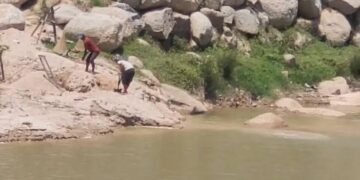







Forests and Environment Minister James Sangma has said that acid mine drainage from coal and limestone mines, not waste from industrial plants, is to be blamed for the ongoing troubles faced by the Lukha River.
The river’s water levels periodically go through periods where it is excessively low, tinged blue and becomes acidic, causing destruction of aquatic life.
Sangma said that besides being a seasonal phenomenon where the PH level comes down to a very acidic level during the lean season, acid mine drainage where the water gets mixed up in coal mine and limestone areas and flows into the river is another cause. However, he said that there are very few effluents from industries that are actively being monitored by the state pollution control board.
Stating that his department is very keen to find remedies to these kinds of challenges, he said that the Algae Pilot Project at Sonapyrdi has shown encouraging results, with efficiency levels beyond expectations.
“We will look to scale this up in the coming days and also plan to implement phytoremediation for other rivers, where issues range from high acidity to high alkalinity. We have also decided to initiate active steps through the Department of Forests and Environment to look into a long-term solution for the restoration of the Lukha River,” he said.
Stating that the need of the hour is to strike a balance between economic activities and maintaining the environment, he appealed to the industries to follow all norms and guidelines.
Meanwhile, Daiapherbha Lamare, secretary of the Hynnriew-Shnong Wah Lukha Association, said that the Lukha has turned blue since 2007 and killed many aquatic lifeforms which is a great loss to the people in the region, especially those living near the river.
Stating that the main cause of pollution are the cement and coke factories, including coal and limestone mining upstream, he stated that the Meghalaya Environment Protection and Restoration Fund should be utilised to clean the river.