











Meghalaya is staring at the very real possibility of 10,000 active Covid-19 cases by the end of May, Chief Minister Conrad K Sangma warned today.
As of today, the state has 4,915 active cases. This has grown from just 1,592 at the end of April.
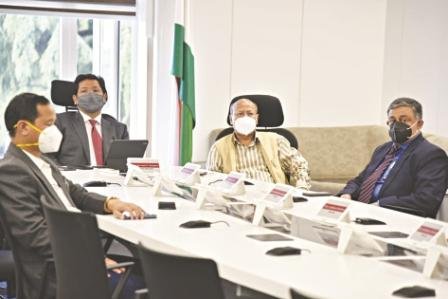
Speaking to the media after a review meeting, Sangma also defended his government’s decision-making process when it came to imposing restrictions and lockdowns at the state and district levels.
“If this trend continues, we will go beyond 7,000 or 8,000 maybe even 10,000 in a short time,” the CM said. It had been projected by the government that there would be 5,000 active cases by May 12 but Meghalaya has still to cross this figure five days later.
Although the government wants to avoid such a situation, Sangma said that the state’s health infrastructure would be able to cope with higher Covid numbers because his administration has ramped up hospital bed capacity and oxygen supply since the start of the second wave.
According to him, the state has expanded the number of oxygen-supported beds from 350 to 750, with the aim to increase this further to 1,000 in the next fortnight.
“We have also doubled our oxygen cylinders from 700 to close to 1,500 since the beginning of the second Covid wave,” Sangma said.
Nevertheless, he urged all Meghalayans to ensure that they follow the Covid protocols in order to slow down the spread of the virus.
“We are looking at a tough situation in the coming weeks but if the society and state work together, we are sure that we will be able to overcome this very difficult phase of up to three weeks where we are seeing rising cases, pressure on the healthcare system and a shortage of Covid vaccines,” Sangma said.
On the issue of a total lockdown, the Chief Minister said that the government has to balance the issue of livelihoods with the overall health situation. Currently only East Khasi Hills and East Jaintia Hills are in lockdown, with the other districts subjected to lighter containment measures.
Sangma also urged the public and political parties to unite in the fight against the coronavirus and not indulge in a blame game. Stating that there is no perfect solution, he appealed to detractors by saying, “This is not the time for a blame game or for finding fault but a time for giving positive suggestions.”