








Garo Hills has always been a warm-hearted place – a place where smiles abound wherever one goes. Here people come forward to help at every beck and call. Recently, two examples of selfless service have reinforced the belief that no matter what the situation, helping hands are always near.
Both these laudable cases were reported from the Bakdil NGO-run Siju Public Health Centre in the district of South Garo Hills on March 17.
Two women and their unborn children were in potential danger due to the complicatedness of their pregnancies as well as the remoteness of the area where they live.
In the first incident, a woman who hails from the village of Rongri, which is approximately 5 kilometres from the nearby Rongsu Agal Health Sub-Centre, was in severe pain due to the advanced nature of her pregnancy. What complicated the situation was the complete lack of transportation in her village as well as the fact that the woman was in no shape to make the walk through the hills to the Sub-Centre for an institutional delivery.
Fortunately for the woman, help was at hand with two good Samaritans, one the nurse of the Sub-Centre and the other the manager of the Siju PHC, travelling the distance and helping her through the birth.
“They went out of their way to reach out to her and ensured they helped her through the prolonged delivery. She has been blessed with a baby girl and both mother and child are doing fine,” said a note by the Bakdil PHC staff from Siju.
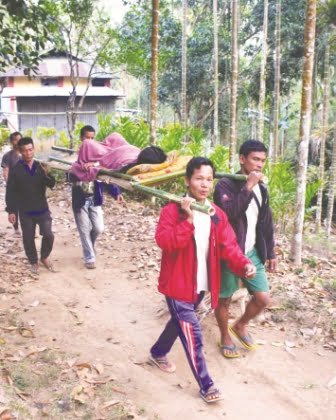
In the second case, which was even more complicated, a woman, who was also on the verge of giving birth, was carried for over 12km by her neighbours.
She was carried by the group of villagers for over three hours on a makeshift bamboo stretcher from Rongsu Agal Sub-Centre to Siju Dobakkol where she was later taken in an ambulance and referred to Williamnagar Civil Hospital in East Garo Hills and there delivered a baby girl.
The villagers had to carry her because no vehicles can reach her village due to the remoteness and lack of a proper road.
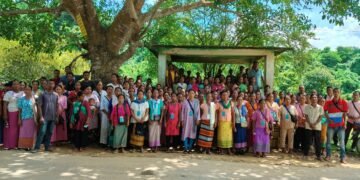
Bakdil expressed its gratitude to the villagers who made the arduous journey on foot to ensure the woman and her child would be safe.
“This is an example how we as a region have gone out of our way to help each other when the need arose. Just hearing about these two cases gives me goosebumps and I feel pride in what they did. This is truly a case where people have gone out of their comfort zone to help each other. We are sure that this is not the last such case and whenever the need arises, people will come forward to help,” said social activist Maxbirth Momin from Tura.
While these two acts of selflessness need to be celebrated, the malaise of poor rural infrastructure is stark. The fact that people still have to struggle during medical emergencies to even get to a medical facility is a reality that needs to be changed as quickly as humanly possible.