




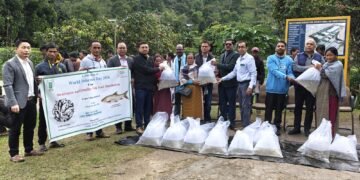






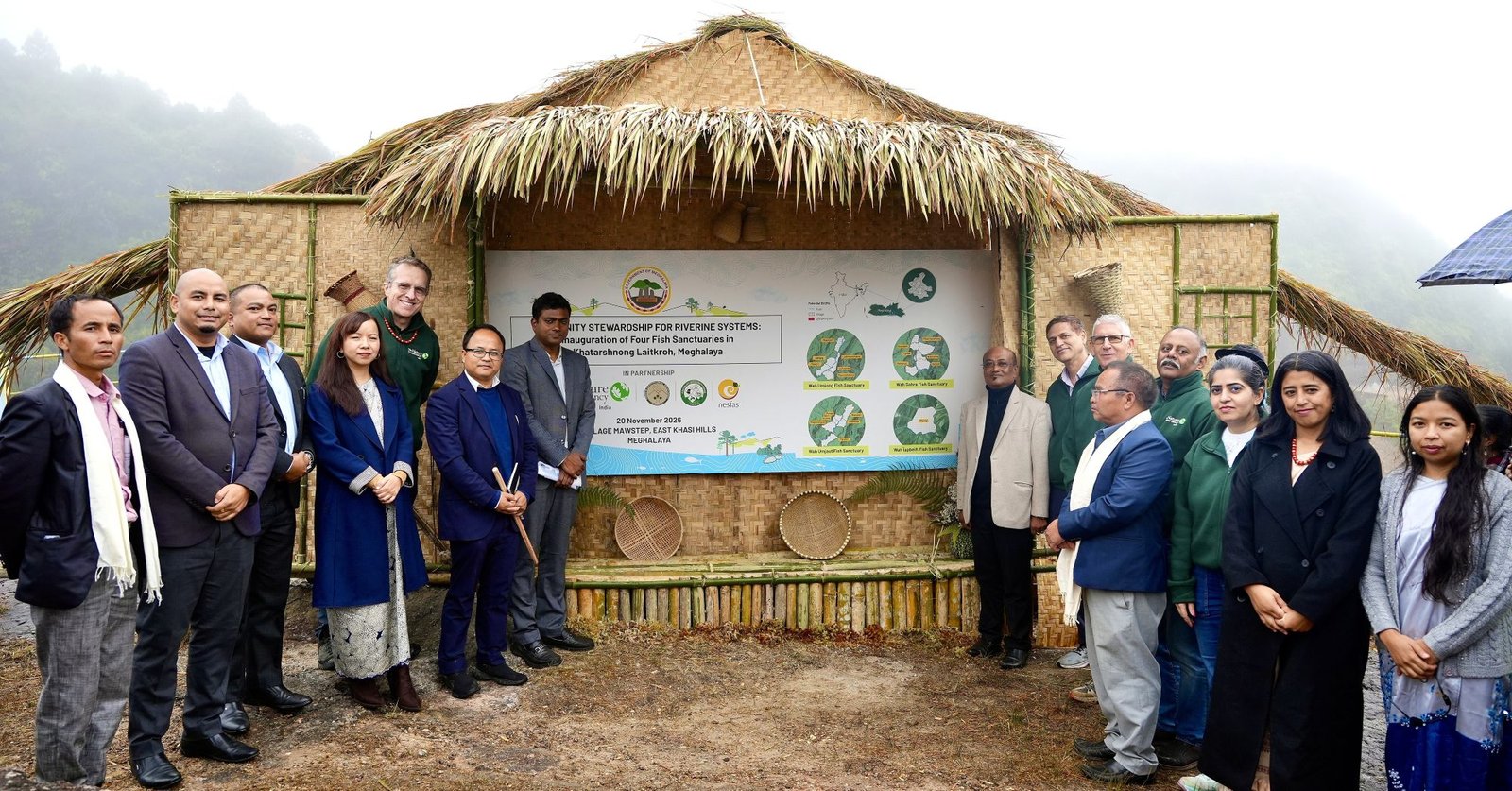
Shillong, Nov 21: Communities in the Khatarshnong Laitkroh block of Meghalaya’s East Khasi Hills formally declared four community fish sanctuaries, marking an important step toward protecting the region’s rivers, native aquatic life and freshwater resources for future generations.
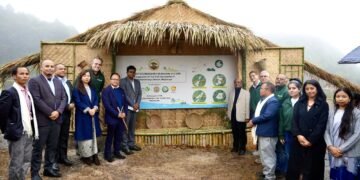
Headmen from the 17 villages gathered in Mawstep yesterday to announce the sanctuaries, along with the Meghalaya Biodiversity Board, the North East Society for Agroecology Support (NESFAS) and The Nature Conservancy (TNC), who supported the local communities in turning their vision into reality.
The announcement comes one day before World Fisheries Day, observed annually on November 21 to recognise the importance of fisheries and fishing communities, food security, nutrition and livelihoods.
The four sanctuaries cover a combined 29.1km of river habitat, equivalent to almost 300 football pitches in length. In practice, these designated river stretches are kept free from destructive fishing, waste dumping and other harmful activities, giving native fish and aquatic life a safe space to breed, grow and recover undisturbed.
This conservation work is especially vital in the North East, NESFAS said in a release, as it is one of the world’s most biodiverse regions. “Its freshwater ecosystems support more than 2,000 aquatic species, including 334 species of fish – many of which are threatened and found nowhere else on earth.”
Will McGoldrick, Regional Managing Director of TNC, said, “True conservation endures when it is led by the people who understand and depend on the region’s resources. By uniting across 17 villages to protect nearly 30 kilometres of vital river habitat through these sanctuaries, the local communities of Meghalaya are setting a powerful benchmark for freshwater stewardship across North-east India. TNC is proud to stand alongside them, bringing science and global experience to support their knowledge.”
The four sanctuaries are Wah Umiong Fish Sanctuary (7.4km), Wah Umjaut Fish Sanctuary (10.9km) the Wah Sohra Fish Sanctuary (8.6km) and the Wah Ïapbeiñ Fish Sanctuary (2.2km). Kong Santi Shabong, a
Sohra MDC Titosstarwell Chyne welcomed the initiative pursued by the communities of these 17 villages in this area and said that the Khasi Hills Autonomous District Council (KHADC) is supportive of the scaling of such work for the welfare of the people and resources of the state.
The hill streams and headwaters of Meghalaya do not just sustain local landscapes – they connect to major river basins that cross state and international borders, making local conservation crucial for the wider region. With freshwater biodiversity threatened globally by habitat loss, pollution, climate change, invasive species and overuse, community-led fish sanctuaries offer a proven way to protect critical fish spawning grounds, NESFAS added.