










Shillong, Nov 13: As the Joint Action Committee (JAC) marched on the Secretariat yesterday over the Shillong Peak Ropeway project, an old National Green Tribunal (NGT) judgment has returned to the centre of the debate.
In a judgment delivered on July 13, 2021, the NGT Eastern Zone Bench, Kolkata, had directed that no construction be carried out in the Lawsohtun area until the state government decided whether the entire area should be declared a catchment or critical catchment area under the Meghalaya Protection of Catchment Areas Act 1990.
The order was passed in two original applications – OA 47/2017 filed by the Raid Laban Dorbar and OA 93/2017 filed by the Greater Laban Community Development Society (GLCDS) – both seeking protection of the forest and water sources on the slopes of Shillong Peak.
Interestingly, GLCDS general secretary Anthony Marweiñ, who had earlier sought protection of the Lawsohtun catchment through the NGT, is now among the most vocal defenders of the ropeway, insisting that the project poses no environmental threat. Marweiñ is also secretary of the 19-South Shillong Advisory Committee and actively defended MLA Sanbor Shullai at Wednesday’s meeting where the JAC rejected a pre-drafted resolution prepared by Shullai even before the meeting began.
The tribunal, comprising Justice B Amit Sthalekar and expert member Saibal Dasgupta, noted that the north-facing slopes of Shillong Peak, known locally as Ka Dymmiew or Ka Kymmiew – “the area where sunlight never reaches the ground” – contain nine drinking water sources.
These were listed as Um Jasai, Um Sohkhlur, Um Mawlong, Um Kynrut, Um Shaw Shaw, Wah Risa, Wah Kdait, Wah Dienglieng and Um Jynriew.
The judgment records that these streams and rivulets are the primary source of drinking water for Shillong city, that the area acts as a carbon dioxide sink and that it is a potential gene pool with rare species like Panax pseudoginseng, Begonia josephi and Cinnamomum glandiferum.
The applicants had alleged that Army authorities had started fencing, felling trees and attempting to build 700 family quarters in the area, threatening the catchment.
The Army, in its affidavit, said the area had not yet been formally notified as a catchment area, that it had suo motu shelved the 700 quarters project to protect ecology, and that the perimeter wall it was building in February 2017 was only to stop encroachment on its own A1 defence land.
The Forest Department admitted that the Army had started construction of a cement boundary wall in February 2017 without a no-objection certificate (NOC) and that the Divisional Forest Officer had immediately stopped the work.
The NGT noted that about 1,500 trees had been marked in red for felling, but there was no proof on record that they were actually felled for the quarters. Photographs showed construction material and a half-built wall but work had stopped.
The Tribunal also traced the long history of inaction. In 2001, the Meghalaya government itself had described Lawsohtun as one of the few “lungs” of Shillong and said all construction – public, Government – including military – should be banned.
In 2007, the Guwahati High Court had directed the advisory board to decide in 60 days whether Lawsohtun should be declared a catchment area. In November 2009 the government delineated the boundary by ridge points, but the notification itself said it could not become final without written consent of landowners, including the Union Ministry of Defence, under Section 5 of the Act.
Finding that the matter was still pending, the NGT issued three key directions.
First, the Forest and Environment Department must obtain consents of affected persons, hear the Army and decide within four months whether the area shown in the November 18, 2009 notification should be declared a catchment or critical catchment area. Second, till such a decision is taken, no construction shall be carried out in the area by the Army authorities. Third, the Army must remove construction debris, if any, lying in the catchment area and restore it to its original position. The tribunal also directed the state to consider whether the defence land in question requires to be protected as eco-sensitive forest.
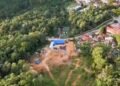
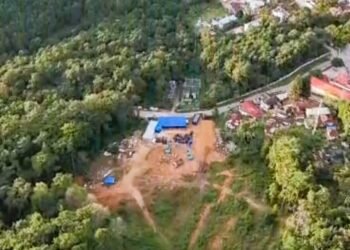
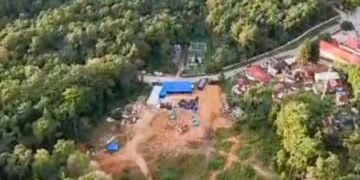
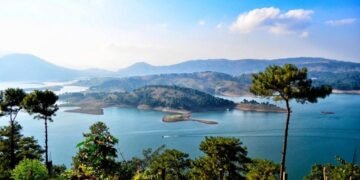
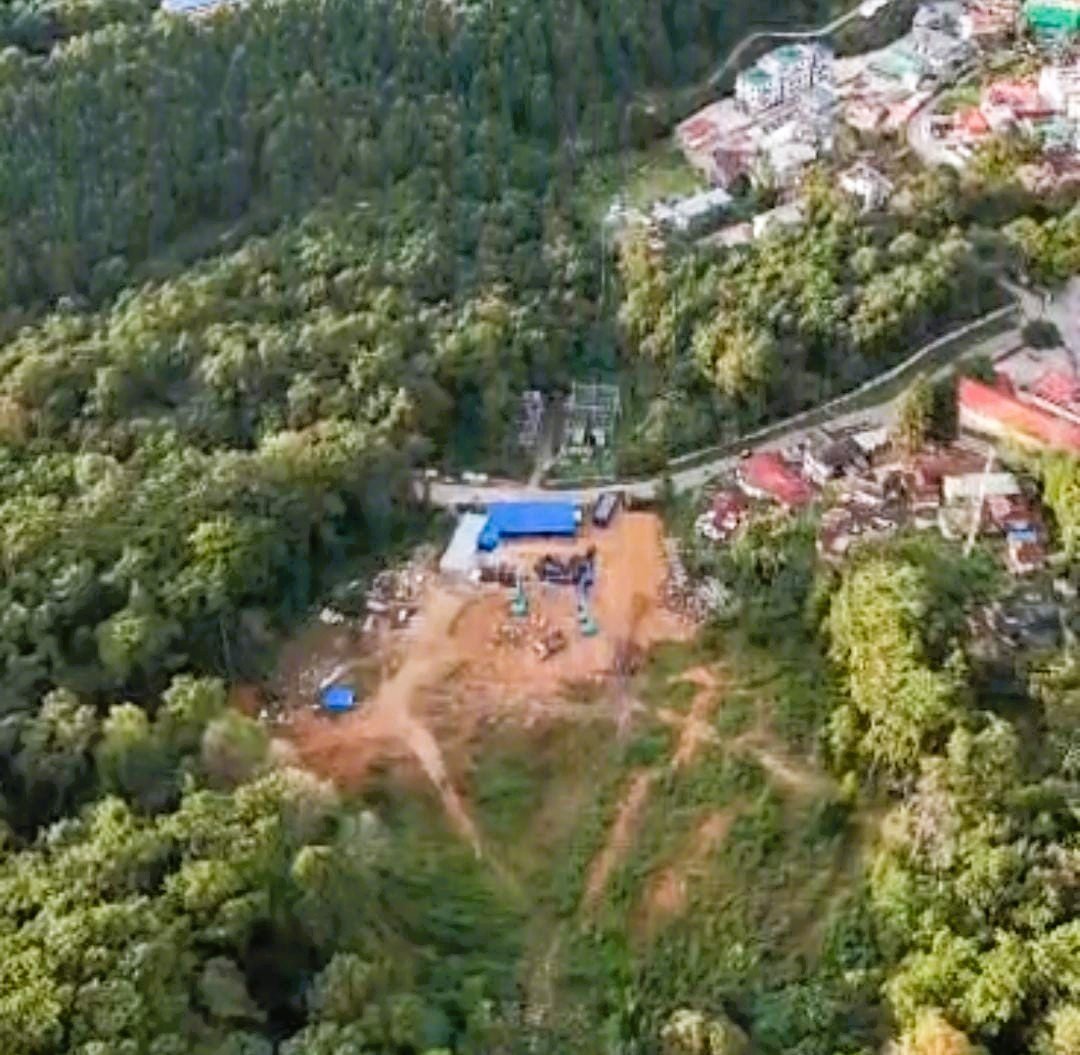
The judgment is now being cited by those opposing the ropeway project at Lum Shyllong, who argue that the same catchment – which feeds Greater Laban and other parts of Shillong and feeds water to the Umiam reservoir – is again under threat.
JAC President Deborah Marbaniang claimed that a water source behind the ropeway site, which used to flow in monsoon and winter, has dried up since trees were cut for the project.
“What is the use of going for an inspection, when even the water source behind the ropeway, water that used to flow in the monsoon and in winter, has dried up since the trees were cut?” she asked.
The Meghalaya government has consistently rejected the JAC’s fears as not based on fact.
South Shillong MLA Sanbor Shullai, meanwhile, has submitted a proposal to the Chief Minister for an independent expert committee of IIT and NIT experts to examine the JAC’s claims on water sources.
The NGT judgment did not itself declare Lawsohtun a catchment area. It left the final decision to the state – a decision the JAC says is still crucial to settling whether any construction, including the ropeway, can proceed in the sensitive zone.