













Shillong, Nov 4: The Meghalaya government has scrapped fresh salary grants to private schools and launched a new scheme that will pay schools only if they perform.
The scheme is called Chief Minister’s Initiative to Maximize Pass Achievement and Classroom Triumph PLUS, or CM-IMPACT PLUS. The Education Department issued the notification on Wednesday.
From now on, all teacher-salary Grant-in-Aid to private schools, except Deficit schools, will be merged into one Structured Pay Framework. No new salary grants will be given.
The government said Meghalaya has too few secondary and higher secondary schools, especially in rural areas, compared to primary schools. Money was going only to pay salaries, not to improve schools. The new scheme will support schools based on real need and results, not just salaries. It will also push private schools to have big campuses, good buildings and playgrounds, help good upper primary schools become secondary schools, and help secondary schools become higher secondary schools. Rural and remote schools will get help to improve buildings.
The scheme has three parts. The first is yearly help for private schools to fill the gap between what a school earns and what it spends. The second is one-time help for private schools that want to start Class 9 to 10 or Class 11 to 12. The third is one-time help for government schools to repair and improve buildings. The scheme will be run by the State Education Mission Authority of Meghalaya, SEMAM.
A top committee headed by the Chief Minister will take the final decision. The Education Minister will be Vice-Chairperson. It will also have the Chief Secretary, Finance and Education Secretaries, and education officials.
For yearly help, a private school must be recognised, must have sent students for SSLC and HSSLC board exams for at least two years, must meet minimum student numbers and pass percentage fixed by the committee, must show audited accounts proving it really has a money gap, and must have a playground.
For upgrade help, a school must have run for five years, must have land and building, and must have a plan for playground and money to run.
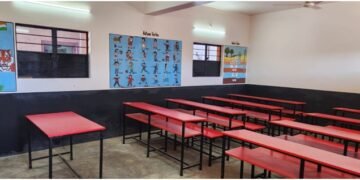
For government schools, priority will go to schools with the lowest infrastructure scores and schools in rural and remote areas. The money can be used for building repair, toilets with separate toilets for boys, girls and children with special needs, drinking water, boundary walls, ramps, electricity, furniture and fire safety.
The yearly grant will continue only if the school keeps its pass percentage, improves its grade, still has a money gap, and submits utilisation certificates and audited accounts on time. If results fall below the fixed level, the grant will be cut or stopped. The school will get one academic year to improve. If it fails, the grant will be withdrawn.
Schools will apply online to SEMAM, which will verify papers, visit the school, and send recommendations to the committee within 30 days. Money will be sent through Direct Benefit Transfer. No separate new budget has been kept for the scheme. It will run within the existing Grant-in-Aid budget.
In special cases, the Chief Minister-led committee can relax any rule if strict application would cause hardship due to local, geographic or socio-economic reasons.