





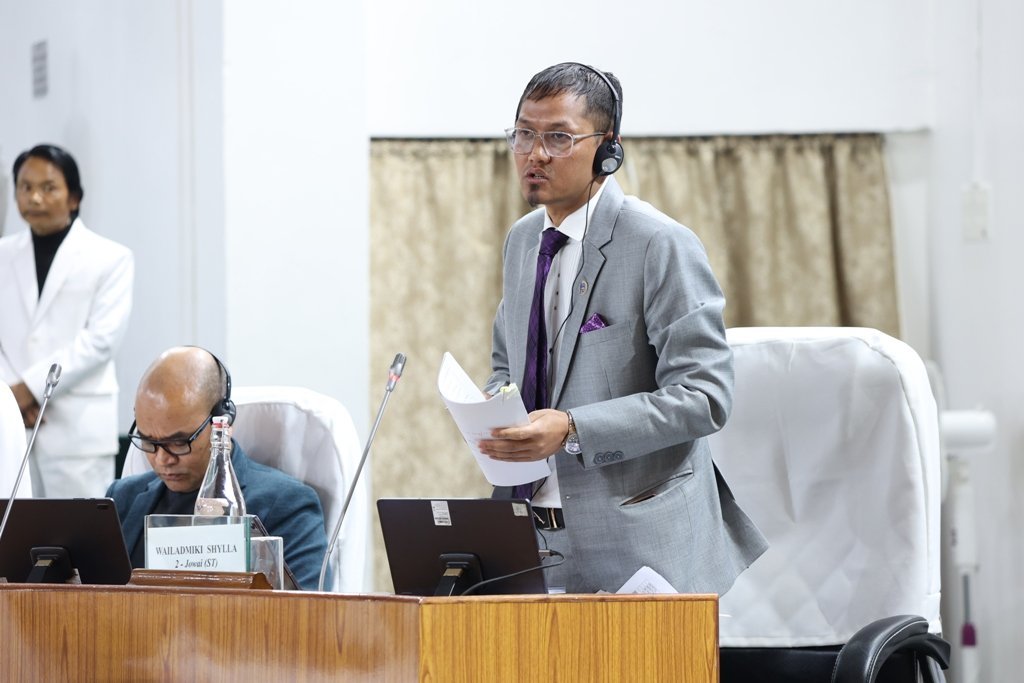
Shillong, Feb 27: Health and Family Welfare Minister Wailadmiki Shylla was forced to try and defend the parlous state of healthcare in Meghalaya, though the information presented in the Assembly make this almost impossible.
Despite rising number of kidney-related diseases, there is only one nephrologist (a doctor who specialises in kidney ailments) in the entire state and she works in a private, not government, facility. There are also only around two dozen working dialysis machines in a selected number of Civil Hospitals, with many patients having to go for private treatment as demand in the public hospitals is too great. The staffing woes of Community Health Centres (CHCs) was also highlighted, a matter that has taken on greater significance after the sudden death of Shillong MP Ricky AJ Syngkon last week.
During Question Hour on the last day of the Budget Session of the Assembly, Mawryngkneng MLA Heavingstone Kharpran raised the matter of shortcomings in healthcare provision.
Responding to the queries, Shylla informed that there are 54 dialysis machines in East Khasi Hills, including 12 at Shillong Civil Hospital and 42 in private hospitals. Of the 12 machines at Shillong Civil Hospital, 10 are functional. He did not have figures for the central government-run NEIGRIHMS.
When asked whether there is adequate trained manpower to operate the machines, the minister said that the number of trained technicians corresponds with the number of dialysis machines available.
Raising concerns over long waiting periods faced by kidney patients, Kharpran sought to know the steps taken by the government to reduce waiting time. Shylla acknowledged the increasing patient load and said the department is working to increase both the number of dialysis machines and technicians to address the issue.
On the unavailability of nephrologists, Shylla attributed the shortage to very few specialists coming forward despite recruitment advertisements.
The Mawryngkneng MLA also questioned why dialysis machines are not available at CHCs. The minister clarified that dialysis facilities are currently limited to district hospitals and that not all district hospitals are equipped yet. He said the government plans to provide dialysis machines to all district hospitals and will explore the possibility of extending facilities to CHC levels in the future.
Highlighting the Indian Public Health Standards, Kharpran pointed out that each CHC is expected to have six specialists, including a physician, surgeon, paediatrician, anaesthetist, dentist and an AYUSH practitioner. He said that Mawryngkneng CHC currently has only one surgeon, leaving residents in rural areas without adequate medical support. Shylla reiterated that specialist recruitment has seen a poor response but added that the department has sent medical officers for short-term training in anaesthesia and obstetrics and gynaecology in South India to mitigate the shortage.
Ampati MLA Miani D Shira sought details on dialysis machines in other civil hospitals across the state. Shylla informed that Tura Civil Hospital has five functional machines; Jowai Civil Hospital has four, of which three are non-functional; Nongpoh Civil Hospital has two functional machines; Tirot Sing Memorial Hospital in Mairang has three functional machines; and Resubelpara Civil Hospital has three functional machines.
Nongkrem MLA Ardent M Basaiawmoit raised concerns over poor patients being compelled to seek expensive treatment in private facilities due to limited capacity in government hospitals.
Basaiawmoit further alleged that some patients were asked to return after three days due to unavailability of slots, calling it a serious matter and urging the government not to shift responsibility to private hospitals. In response, Shylla said dialysis treatment is covered under the Meghalaya Health Insurance Scheme (MHIS), with each dialysis session in district and civil hospitals costing Rs 3,000 and that treatment in private hospitals is also covered under MHIS. In 2025–26, the total amount claimed through MHIS for dialysis treatment stood at Rs 11.36 crore. In the absence of nephrologists, he added, medicine specialists are overseeing dialysis care.
Leader of the Opposition Dr Mukul Sangma described the matter as extremely important, citing the rising trend of lifestyle and autoimmune diseases and the increasing incidence of kidney failure. He noted that patients from East, South and South West Garo Hills, as well as Tura, often have to travel to Guwahati and other states for treatment, causing immense hardship to families.