

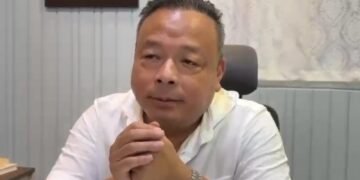


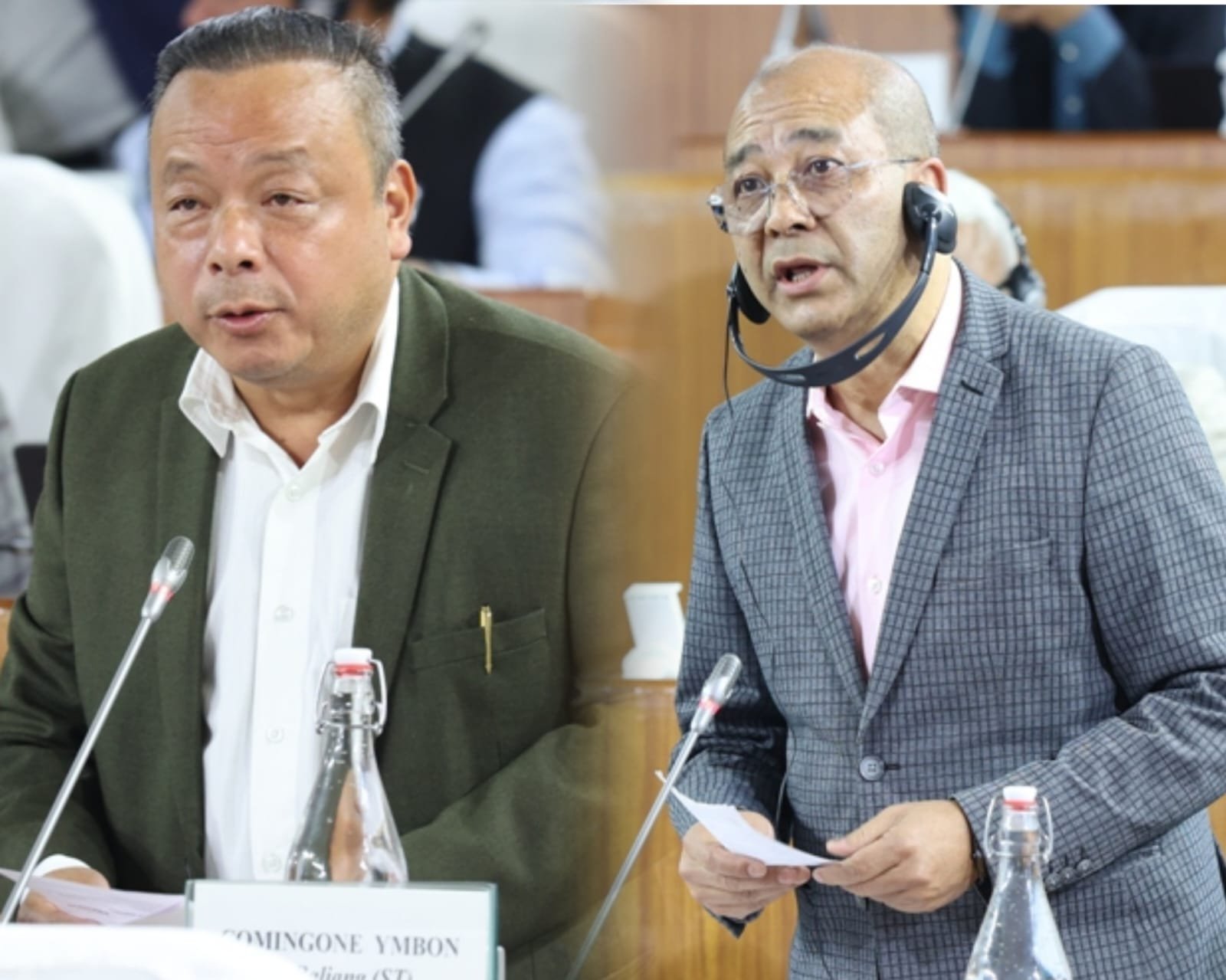
Shillong, Feb 19: In politics, unity among party members is often seen as strength. However, during the ongoing budget session of the Meghalaya Legislative Assembly, this notion was broken as UDP MLA Paul Lyngdoh engaged in a tensed exchange with Power Minister Metbah Lyngdoh.
During the session, Paul did not shy away from grilling about the operations of the Meghalaya State Electricity Regulatory Commission (MSERC).
Observers noted the visible tension and the probing questions about the commission’s functional status indicated a deeper underlying rift, especially after Paul was dropped from the cabinet during the reshuffle last year— a development that had reportedly left him disgruntled.
During the question hour, Metbah read out a prepared reply stating that the powers and functions of the State Electricity Regulatory Commission are defined under Section 86 of the Electricity Act, 2003. He informed the House that the MSERC is a two-member commission but currently functions with only one member, the Chairman, as the post of Member (Law) remains vacant. He further cited Section 108 of the Electricity Act, 2003, which outlines the State Government’s power to issue policy directions to the Commission.
Paul questioned whether the Commission was statutory or constitutional in nature and sought elaboration on the implications of its status. In response, the minister clarified that the Commission is a statutory body constituted under Section 82 of the Electricity Act, 2003, notified by the Government of Meghalaya on March 26, 2004, and made functional on June 6, 2006, when its first Chairperson assumed office.
Unsatisfied, Paul Lyngdoh repeatedly asked what being “statutory” implied in terms of autonomy, accountability, and government control — particularly regarding tariff fixation. He pointed out that if the Commission is statutory, it would operate with considerable autonomy, raising questions about the extent of the State Government’s influence over decisions such as electricity tariff determination.
Responding at length, the power minister enumerated the Commission’s functions under Section 86 of the Electricity Act, 2003. These include determining tariffs for generation, supply, transmission and wheeling of electricity within the state; regulating electricity procurement processes; issuing licences to transmission and distribution entities; promoting renewable energy integration; adjudicating disputes between licensees and generating companies; levying fees; enforcing quality and reliability standards; and fixing trading margins in intra-state electricity trading.
He also highlighted the Commission’s advisory role to the State Government on matters such as promoting competition, efficiency, restructuring of the electricity industry, and investment in the sector. However, he clarified that under Section 108 of the Act, the State Government’s powers are confined to policy decisions in public interest and do not extend to directing the Commission on core functions such as tariff determination.
Paul then referred to a public meeting held on December 22, 2005, at Phulbari Inspection Bungalow, where MLAs, traditional leaders and civil society groups had expressed strong resentment over frequent power cuts, weak infrastructure and rising electricity bills. He questioned whether the Commission had undertaken any consultative process prior to that episode of public outcry.
The minister replied that while he did not have specific details of that particular instance, the Commission conducts public hearings as part of the tariff revision process. He stated that tariff proposals are placed for public consultation annually and that public hearings are mandatory before finalisation of tariffs. When pressed further on the frequency of consultations, he confirmed that the exercise is conducted annually.
The issue of financial assistance to the Commission was raised by VPP MLA Heavingstone Kharpran, to which the minister responded that Rs 3.20 crore has been allocated for 2025–26. He clarified that the assistance is primarily for salaries and office expenditures. On being asked about the number of consumer petitions and appeals filed before the Commission in the last three years, the minister sought notice to furnish details.
Raising concerns over past tariff hikes and public complaints, MLA Rupa Marak asked whether any inquiry had been conducted following public outcry. Metbah maintained that electricity charges billed to consumers are strictly based on tariffs approved by the Commission and that no entity can charge beyond the approved rates.
Mawlai MLA Brighstarwell Marbaniang further sought to know whether the Commission has provisions to penalise frequent power disruptions. The minister responded that while the functions of the Commission are clearly laid down in the Act, there is no provision for penalties or fines specifically in relation to power supply disruptions under the regulatory framework discussed.