






Shillong, Jan 30: The Supreme Court has set aside the Meghalaya High Court conviction and jail sentence of Bernard Lyngdoh Phawa and Boni Lyngdoh Phawa, who are the accused in the murder of 21-year-old Biplab Das, an undergraduate mass communication student of St. Anthony’s College, Shillong.
Das was said to have been kidnapped and killed for ransom by his own friends. He went missing on February 18, 2006. Three days later his body was found buried in a grave in Mawlai-Mawroh and exhumed. One of the accused was alleged to have led the police to the site.
The trial court had rejected the prosecution case that the duo were the killer and set them free on March 26, 2019.
The Meghalaya High Court on September 27, 2023 reversed the trial court order and convicted the Phawa duo to life imprisonment based on the evidence and their confessional statements.
Bernard approached the Supreme Court to challenge the verdict of the Meghalaya High Court.
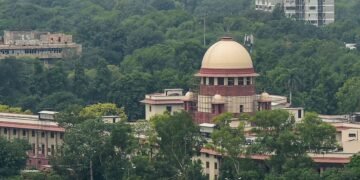
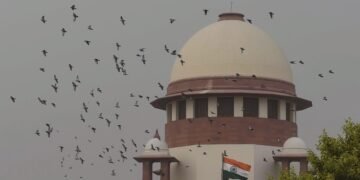
The Supreme Court in its verdict on January 27, 2026, a division bench of Justice Sanjay Kumar and Justice K. Vinod Chandran said confession alone is not enough unless it is voluntary and supported by other proof. Since the evidence was weak and uncorroborated, the court set aside the conviction and freed the duo.
The flip-flip of judicial verdicts in this case has obviously left the laity in a daze as to what to believe and what to reject. The three courts cannot be blamed for such divergent verdicts as the judges are entirely dependent on the evidence and arguments placed before it by the prosecution. In this case, the very evidence was lacking which shows up the careless police work. The confessionals by the accused were not signed properly by the Magistrate taking the evidence, as the SC bench clearly pointed out that the confession was made on March 8, 2006 whereas the magistrate signature was on March 9, 2006 which was one of the reasons which made the confession unacceptable to the SC Bench.
“One other compelling circumstance is the fact that the accused, when produced before the Magistrate for the purpose of recording the confession, were never asked as to whether they required the assistance of a lawyer,” the SC Bench said.
It may be pointed out that the murder held the general public in the same riveting grip as had the Raja Raghuvanshi murder case last year.
Das was the son of an Assam based tea-gardener. His death at the hands of friends, as the public was told at that time, caught the sympathy of the people with many demanding quick justice, chargesheeting and conviction.
The Trial Court took 13 years to give its judgement, the Meghalaya High Court took another four and the Supreme Court held it since then, till the reversed verdict this month.
After all that was said by the courts, the question now is wide open. Who killed Biplab Das and buried him in a grave in Mawlai Mawroh as he was allegedly found? The lack of an answer is a chilling vacuum for the public.