









Shillong, Jan 30: The Hynñiewtrep Youths’ Council (HYC) has alleged that Meghalaya is having to bear the cost of several projects on its own unlike states ruled by the Bharatiya Janata Party (BJP) where assistance from the central government (also run by the BJP) is more forthcoming.
Through Right to Information (RTI) findings, the HYC said that Meghalaya has received little in the way of central assistance for externally-aided projects (EAPs), with thousands of crores of rupees having to be borne by the state itself.
Meghalaya under the National People’s Party (NPP) has undertaken several such EAPs where the bulk of the funding is provided through 50-year interest-free loans.
These amount to Rs 1104.65 crore for capital investment undertaken in 2022-23 (as against Rs 500.69 crore in central assistance), Rs 1361.0134 crore from 2023-24 (as against Rs 611.60 crore in central assistance), Rs 2,445 crore from 2024-25 (as against Rs 682.61 crore in central assistance)
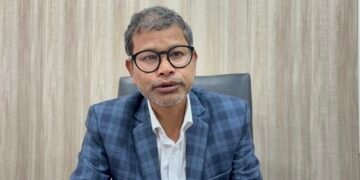
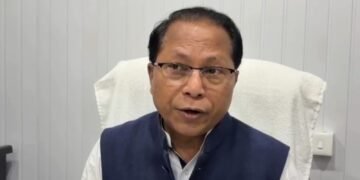
The HYC’s Enlang Sawian added that in the last three years the Meghalaya government got a total fund of Rs 6,700 crore.
Special assistance for capital investment comes as financial assistance in the form of loans, funded by the World Bank, Asian Development Bank, Japan’s JICA, etc.
Such loans are for big infrastructure projects like construction of roads, buildings, stadiums, etc
“We are not opposing development in the state. We therefore need money to fund projects. But the special assistant or the grant by the central government is very less,” the HYC leader said.
He pointed out that BJP-ruled states get financial assistance or discretionary grants to the tune of thousands of crores of rupees to help develop those states but Meghalaya, led by the NPP, which is close to the central government, does not get such funding.
Sawian said that in the future the burden of paying the loans will be on governments that will rule the state then and may lead to increased taxes on ordinary people.
The issue of the increasing reliance of Meghalaya on loans has been raised several times in the past, including in the Assembly and the government’s consistent stand has been that it expects the investments in infrastructure to pay for themselves through greater state GDP and resulting increase in government income without proving to be a burden on the general public.