












Shillong, Jan 28: India has taken a significant step towards showcasing its rich cultural heritage globally, with the submission of the nomination dossier, “Jingkieng Jri / Lyu Chrai Cultural Landscape, Meghalaya” to UNESCO for World Heritage consideration.
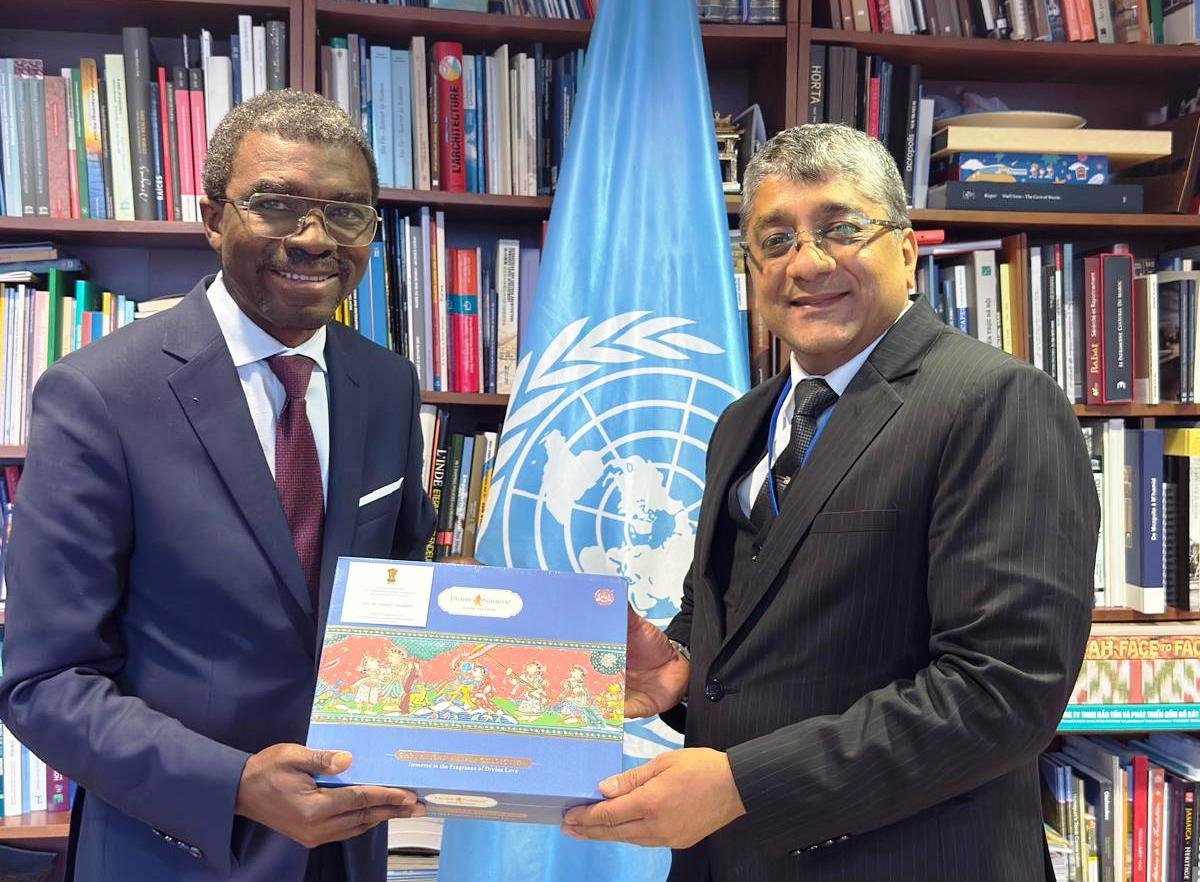
The dossier was formally submitted by Ambassador Vishal V. Sharma, Permanent Representative of India to UNESCO, to Lazare Assomo Eloundou, Director of UNESCO’s World Heritage Centre.
Located in the Khasi and Jaiñtia Hills of Meghalaya, the Jingkieng Jri or Living Root Bridge is a testament to the harmonious relationship between people, nature, and spirituality, shaped over centuries by Indigenous Khasi and Jaintia communities.
The landscape is a living example of traditional systems of land use, governance, and ecological stewardship, reflecting the Indigenous worldview of respect, reciprocity, and responsibility toward Mei Ramew (Mother Earth).
Ambassador Sharma expressed gratitude to Prime Minister Narendra Modi, Union Culture Minister Gajendra Singh Shekhawat, Chief Minister of Meghalaya Conrad Sangma, and the local communities for their efforts in nominating this cultural gem.
The submission of this dossier highlights India’s commitment to preserving its rich cultural and natural heritage, particularly the living traditions and knowledge systems of Indigenous communities.
If inscribed, Jingkieng Jri / Lyu Chrai Cultural Landscape will join India’s list of 53 UNESCO World Heritage Sites, further cementing the country’s position as a leader in cultural heritage conservation.