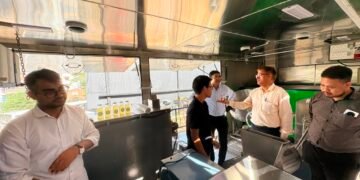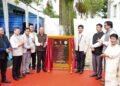

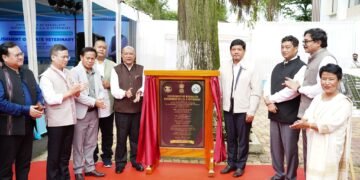








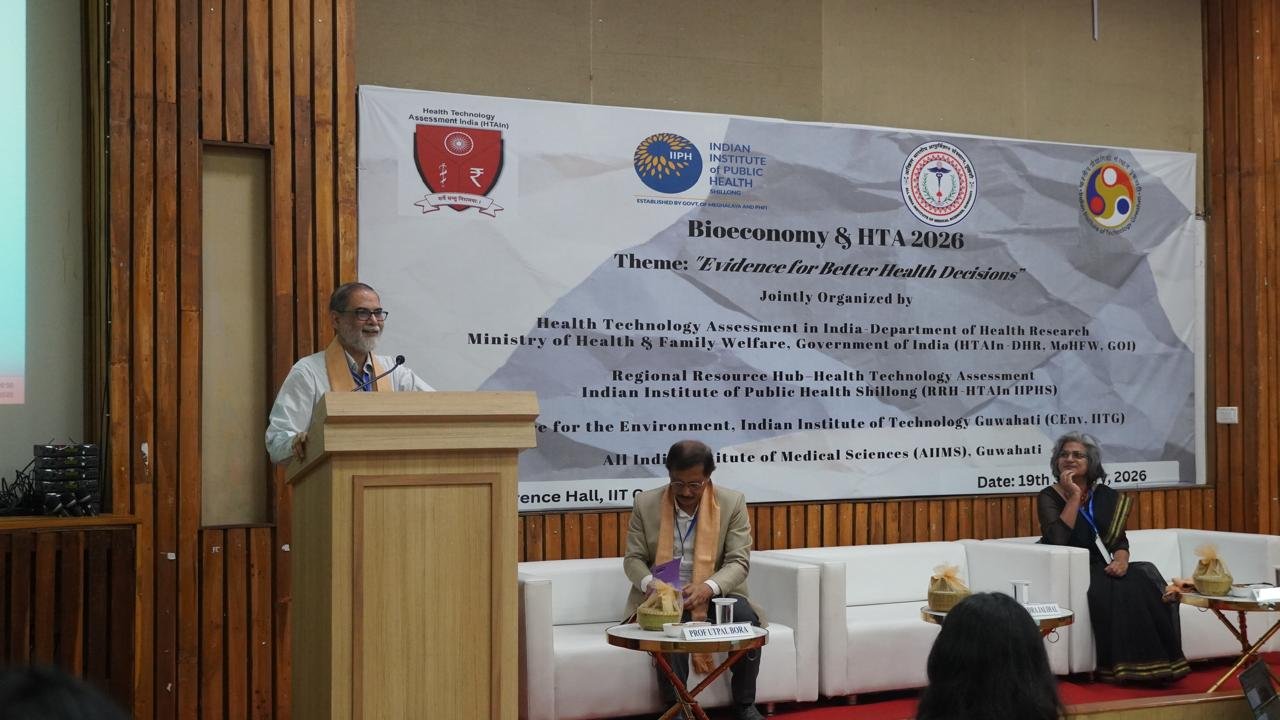
Shillong, Jan 21: An international conference on ‘Bioeconomy and Health Technology Assessment (HTA): Evidence for Better Health Decisions’ was held at IIT Guwahati, jointly organised by the Indian Institute of Public Health Shillong (IIPHS), IIT Guwahati and AIIMS Guwahati, in collaboration with Health Technology Assessment in India, Department of Health Research, Union Ministry of Health and Family Welfare.
The conference brought together policy stakeholders, researchers, clinicians, students and public health professionals to discuss the role of evidence-based approaches in strengthening health systems in India, a press release said today.
The event aimed to build awareness and understanding of Health Technology Assessment, particularly among students, early-career researchers and professionals from non-economics backgrounds such that a multidisciplinary approach to health and service delivery can be adopted.
HTA is a systematic approach used to assess the clinical effectiveness, costs and broader impact of health technologies such as medicines, diagnostics, devices and public health interventions, and plays an important role in guiding health policy and resource allocation. It brings together the fields of engineering and drug/device development, clinical and public health with the research methodology of economics.
A highlight of the conference was the oral paper presentation session, moderated by Dr. Phulen Sarma (AIIMS Guwahati). Seven presentations showcased ongoing HTA research from institutions across India. Topics included cost-effectiveness analysis of AI-assisted chest X-ray tools for tuberculosis detection, economic evaluation of HPV DNA diagnostics for cervical cancer, assessment of newborn screening technologies, maternal nutrition interventions, and tools for improving HTA modelling. The session demonstrated the wide application of HTA methods across clinical and public health domains.
The afternoon session included a presentation by Dr Bhaskar Borgohain (NEIGRIHMS, Shillong) on the evaluation of a lightweight prosthesis, highlighting the role of HTA in medical innovation. This was followed by a talk by Dr Biju Soman (SCTIMST, Trivandrum) on the use of free and open-source software in HTA. An international perspective was provided by Saudamini V Dabak (HITAP, Thailand), who discussed topic prioritisation in HTA based on the Thai experience.
The conference concluded with an interactive session involving policymakers, speakers, and participants, focusing on challenges in conducting HTA in India, capacity-building needs, and opportunities for collaboration.