











Shillong, Dec 16: In Meghalaya, a quiet revolution is unfolding as residents step forward to care for streets, villages and public spaces once written off as dumping grounds. With brooms in hand and purpose in their stride, these everyday citizens are reclaiming shared spaces as extensions of their own homes.
Urban waste is often discussed in terms of infrastructure gaps and policy frameworks, but in the streets of Meghalaya, the response is deeply personal. Plastic bottles and aluminium cans that linger for decades have become one of the most visible signs of neglect in towns and villages. Responding to this challenge, the Urban Affairs Department of Meghalaya has intensified its focus on sustainable waste management, aligning policy, infrastructure, and public participation also inspired by the national Swachhata Hi Seva campaign which has successfully elevated civic responsibility, translating into tangible action on the ground.
What gives these efforts real momentum, however, are the individuals who have chosen action over apathy. Across districts, volunteers have taken it upon themselves to clean streets, collect plastic waste, and set examples that quietly influence entire communities and redefine what urban responsibility truly looks like.
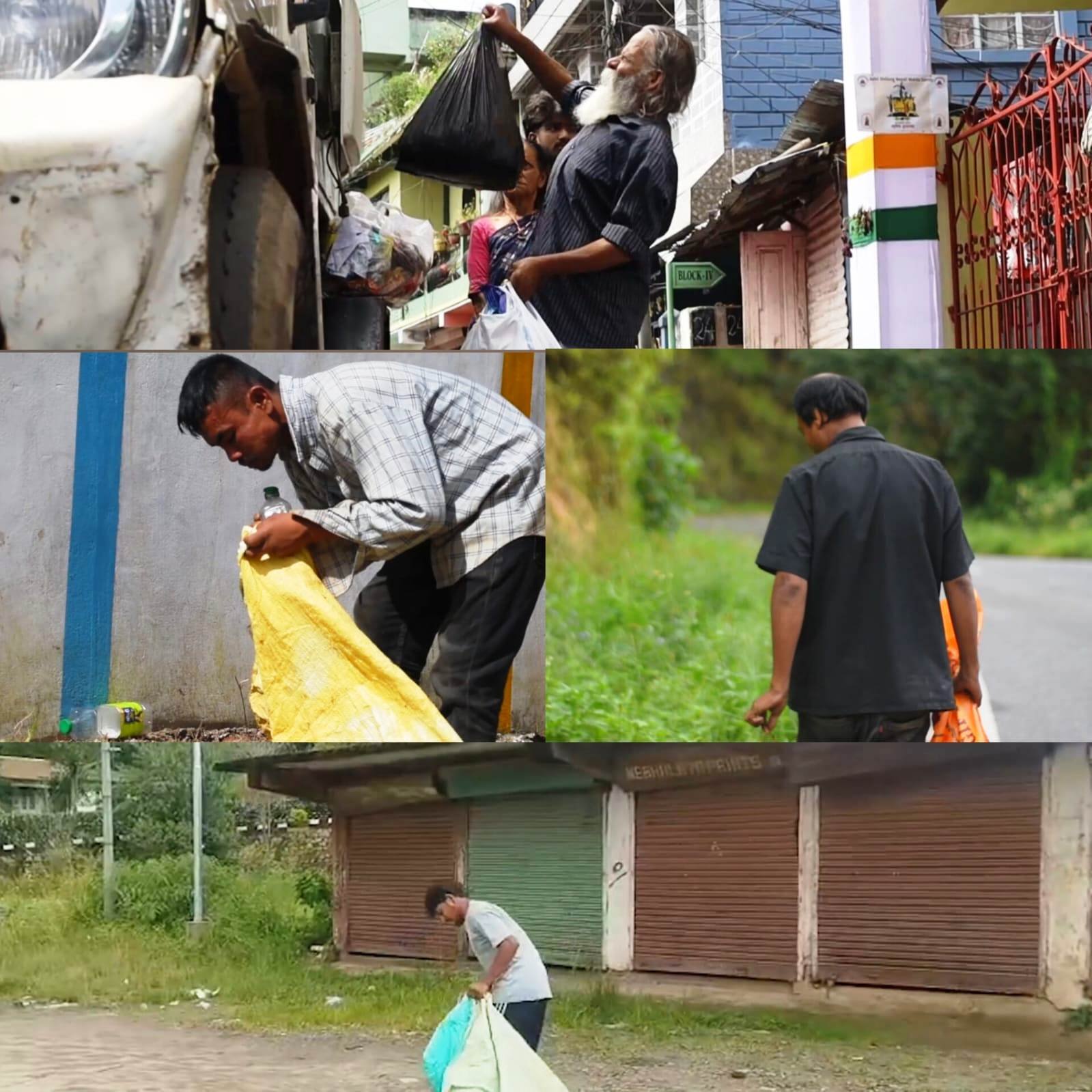
In Dulong, West Jaintia Hills, Raju Najiar’s mornings begin not with rest, but with the selfless service of collecting empty cans and bottles from the streets, ensuring his locality remains litter-free.
Shynnaki Dkhar from Nongkynrih village, West Jaintia Hills, shows remarkable resolve. Despite being differently abled, he relentlessly scavenges dirt and rags from both his own and nearby areas, proving that commitment is greater than constraint. Local residents noted that despite physical challenges, he regularly collects plastic waste, bottles and other litter across several localities. His work has significantly reduced the need for frequent cleaning in the area and has encouraged greater awareness about cleanliness among residents.
In Upper Mawprem, East Khasi Hills, Deba Prasad Ghosh has been a consistent force for years, by supporting drain cleaning and waste removal. Reflecting on his long-standing efforts, he says, “I have been doing this for the past 20 years. In the morning, whatever waste is there on the road, the municipal workers clean it up. I help put in cleaning the drains, and I think this will be better for everyone in the neighbourhood, nobody will fall ill, or cause a burden to the rest of the community.”
Meanwhile, Airborlang Lyngdoh Marshillong from New Nongstoin, West Khasi Hills, focuses on community awareness. He undertakes the often-unnoticed step of sweeping and picking up plastic bits and waste, determined to bring about change through direct action.
Supporting these citizen-led efforts are now being reinforced by the Urban Affairs Department’s innovative Green Deposit Scheme, rolled out in December 2025. Implemented at major ecotourism destinations such as Sohra and Dawki, the scheme adds a refundable deposit to plastic beverage containers. Tourists receive the deposit back upon returning empty bottles, encouraging responsible behaviour and significantly reducing litter in environmentally sensitive areas.
Alongside individual efforts and policy measures, women-led initiatives are also emerging as key contributors to Meghalaya’s waste management story. Groups like the ‘Merry Maidens’ of Shillong or the Lainehskhem Self-Help Group (SHG) who now produce certified compost using traditional and indigenous techniques, turning organic waste into a valuable resource, highlight the growing role of women in driving cleanliness, sanitation, and environmental stewardship at the community level. The combined efforts of the Urban Affairs Department’s policies, the inspirational work of citizens like Raju Najiar and Shynnaki Dkhar and the emerging role of women’s groups lead towards a positive shift toward a cleaner, greener Meghalaya.
With these initiatives, Meghalaya’s commitment towards a cleaner environment, long after posters fade and campaigns end, will continue its momentum through its Green Deposit scheme.