












By Raphael Warjri
The Role of Khasi Democratic Principles
One of the most vital aspects of Khasi democratic principles is the community’s commitment to caring for the elderly, infants, and the underprivileged. Traditionally, elders and children receive ample support from their clans and neighbors, resulting in a society where few beggars are found. While this culture thrives in rural areas, urbanization and modern education have contributed to its decline, leading to the emergence of vagrants in cities.
However, excessive indulgence can sometimes foster dependency, leading to frustration among those who receive help. In this context, individuals often prioritize personal gain at the expense of others, causing a widening gap between the rich and the poor. Social interactions have diminished, with many retreating into their comfort zones, making it increasingly difficult for individuals to ensure their own safety and security.
The influx of migrants from both the mainland and neighboring regions exacerbates these challenges, creating demographic imbalances and contributing to social fragmentation. Moreover, the elite often overlook the contributions of traditional institutions, placing undue reliance on state administrative machinery. These factors underscore the necessity of revitalizing local councils, or Dorbar Shnong, to address the needs of the community effectively.
Incorporating the principles of Khasi folk democracy into local governance can bridge gaps, promote inclusivity, and strengthen community ties. By empowering local councils, we can foster a more equitable distribution of resources and ensure that every individual has a voice in the decision-making process.
The Dynamics of Community Integration and Socioeconomic Challenges
The natural influx of various communities from neighboring regions and the mainland initially fostered solidarity and contributed to the well-being of the social fabric. This assimilation occurred in an atmosphere of camaraderie, largely free from ethnic consciousness. However, the pursuit of economic, educational, and cultural superiority has created social barriers among these diverse groups.
Historically, migrant communities ventured into inaccessible terrains, enriching local agriculture and cattle farming. They mingled with rural populations, gradually becoming integral to society while maintaining their unique identities without conflict. Yet, as urban, educated elites—particularly among the Nepali residents—asserted their rights, tensions arose with the local indigenous community, leading to social enmity and political unrest. The aspirations of a few in urban centers have had devastating effects on the social and economic well-being of many in rural areas.
In urban conglomerates, exploitation and misappropriation are prevalent, especially in trade and employment sectors. While some migrants thrive through merit and sensible approaches, many entered rural areas seeking opportunities in trade and labor, often filling gaps left by a lack of skilled local youth.
Indigenous affluent communities have made strides in trade, education, and cultural endeavors by engaging with regional and mainstream communities. They tend to embrace existing processes without asserting ethnic identities in commercial, educational, or service domains. However, there are notable instances of exploitation and discrimination against local talents, alongside an undue preference for mediocrity in education and employment.
Consequently, youth resistance movements, often organized by pressure groups, sometimes shift focus from performance excellence to communal tension and political chaos. Essential sectors such as health services, education, and the economy are critical for societal development and sustainability. Unfortunately, the corporatization of these sectors has facilitated nepotism, depriving ordinary citizens of their legitimate rights.
Moreover, the expansion of these sectors can adversely impact nature and ecology. The pharmaceutical and medical equipment industries have prioritized profit over public health, contributing to widespread ailments. While advancements in science and technology hold potential, they often focus narrowly on academic achievement, with limited exploration of environmental stewardship. This pursuit of economic prosperity has overlooked ecological considerations, leading to numerous natural calamities and exacerbating climate change.
The Dilemma of Economic Prioritization in Healthcare and Environmental Impact
When economic growth takes precedence, other critical aspects are often sidelined, leading to potential disasters that affect the general public. This is typically when administrative intervention occurs, attempting to mitigate the fallout. Despite advancements in modern administrative systems, their effectiveness can sometimes be overshadowed by the consequences of human-centric regulations.
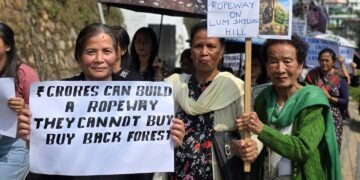
A glaring example of this is seen in the cement factories of Jaintia Hills. The initial establishment and subsequent expansion of these industries have devastated forest cover, polluted rivers, and caused extensive environmental damage. Beyond the direct impact on local communities, there is significant destruction of natural herbs used for medicinal purposes, affecting practitioners of alternative medicine who often remain silent victims in the face of authority and unscrupulous traders.
The dominance of modern healthcare and the pharmaceutical industry frequently sidelines alternative medicine. While modern medicine has undeniably saved countless lives through its innovative approaches, it operates within a framework that prioritizes economic sustainability. People naturally wish for the longevity of their loved ones, yet this desire comes at a cost—one that sustains medical research, the pharmaceutical industry, and the development of advanced medical technologies.
Despite the scientific validation underpinning most healthcare systems, including allopathic practices, there remain exceptions, such as the ongoing pandemic, that challenge established norms. The irony lies in the rich history of two-century-old medical practices, particularly herbal healing systems, which have significantly shaped societal health.
One of the main challenges for alternative medicine is the lack of scientific validation; many cures rely on belief systems and the perceived miraculous abilities of healers. The knowledge possessed by shamans or herbal practitioners is often esoteric, making it difficult for patients to fully understand or articulate their healing processes. This relationship hinges on trust and the credibility of ancient healing traditions.
Interestingly, most allopathic drugs, vaccines, and chemical compounds originate from organic substances found in nature. The very foundation of modern treatment often derives from natural energy sources. Therefore, alternative medicine should be viewed as complementary to conventional practices—a sentiment acknowledged by many traditional herbal healers, though not reciprocated by the medical education community.
In the modern healthcare system, public democratic rights are universal. However, implementation often rests with specialized personnel whose expertise may be beyond the grasp of the average citizen. For instance, physicians prescribe medications based on their understanding of treatment processes, which are formulated by skilled professionals in pharmaceutical preparation. Similarly, the operation of medical devices and equipment requires coordination among various specialists.
The Complex Dynamics of Folk Healthcare and Colonial Influence on Khasi Democracy
In contrast to modern healthcare, the folk healthcare system fosters a clear relationship between the healer and the sick. Access to traditional medicine is generally open and rooted in the community’s knowledge. Shamans and healers learn their craft from ancestors, passing down traditional knowledge to dedicated and responsible apprentices. However, this knowledge is often not shared widely, as it could lead to misinterpretation or misuse by the general public. Consequently, this knowledge is perceived as divinely inspired, tied to natural forces and energies.
Folk healing methods often include chants and prayers, and various techniques address specific ailments—such as casting away malevolent spirits, applying blows to treat burns, or using lime for stomach issues. While modern society may dismiss these practices as superstition, they hold relevance today, even in urban areas. Ironically, practices like astrology are popular among the elite, a concept often foreign to rural communities. Despite the effectiveness of various healing methods, including quackery, many remote areas still lack proper healthcare access, leading residents to rely on traditional herbal remedies.
During the COVID-19 pandemic, it was crucial to disseminate accurate information, yet it was equally important not to undermine the authorities’ efforts to combat the virus. Misinformation can lead to public confusion, and citizens’ democratic expressions may be suppressed to align with governmental aspirations. This suppression can stigmatize the illiterate and underprivileged, especially when authorities fail to meet their healthcare missions.
The blending of customary practices with modern civic administration, without respecting indigenous traditions, has created gaps in governance, particularly affecting indigenous communities. The imposition of colonial laws on traditional customs has often been seen as an infringement on the rights of the local populace. The colonial government sought to undermine genuine customary practices, leading to a direct attack on folk democracy.
For example, the transition of land ownership and public amenities from indigenous clans to colonial authorities marks a significant loss of autonomy. Since 1918, the British colonial government prioritized their interests, often at the expense of the indigenous people, who benefited from civic conveniences provided by their oppressors.
In Khasi folk democracy, elder male clan members traditionally hold administrative authority over properties, while female members serve as custodians. However, the colonial government manipulated this structure, transferring control of community land from male elders to female custodians, often with inadequate compensation. This not only disrupted the traditional authority of males but also served the colonial agenda by undermining the existing democratic framework.